Pimples and bumps on dogs are most often caused by bacterial folliculitis, an infection of the hair follicles usually caused by staph bacteria.1,2 Other common causes include canine acne on the chin and muzzle of young short-coated dogs, puppy impetigo on the belly, hives from insect bites or other triggers, and lumps such as cysts or tumors.3,4,5,6 Infected bumps are usually linked to another problem such as allergies, parasites or hormone disease.1 Under 2025 guidelines, antiseptic shampoos, wipes or sprays, usually chlorhexidine, are first-line treatment for pimple-like skin infections.1,7 Any lump that lasts, grows or changes should be checked with a needle sample, because "quiet and slow growing masses can be cancerous."6,8
See a vet promptly if your dog has:
What the Research Says
- Antiseptic wipes help. A 2024 study of 20 allergic dogs found that daily 3% chlorhexidine wipes for 14 days significantly improved skin and cytology scores.9
- Most skin tumors aren't cancer. About two-thirds of canine skin tumors are solitary, benign lesions, but a needle sample is still needed to tell them apart.8
- A simple first test. MSPCA-Angell calls a fine-needle aspirate "the most common diagnostic test for skin masses" and a "non-invasive, low risk, relatively low cost diagnostic tool."6
- Hives fade fast. Merck notes that hives usually disappear within a few hours.5
Common Causes of Pimples and Bumps
- Bacterial folliculitis: red bumps and pustules around hair follicles, with crusts, rings of peeling skin and patchy hair loss. See pyoderma.2,1
- Puppy impetigo: pustules on the hairless belly of young dogs that aren't in the hair follicles1,4
- Canine acne: red bumps and blackheads on the chin, lips and muzzle of young short-coated dogs such as Bulldogs, Boxers, Dobermans and Rottweilers3
- Hives: raised, itchy welts, most often caused by insect bites or stings, shampoos or medicines5
- Parasites: mites and flea bites10,1
- Cysts and growths: cysts, warts, histiocytomas, fatty lumps (lipomas) and tumors such as mast cell tumors6,8
Canine Acne
Canine acne is an inflammation of the hair follicles on the chin and muzzle, probably triggered by minor trauma, and it "develops at a young age."3 Secondary staph infection is common, causing pustules and yellow crusts. In severe cases follicles rupture and form draining tracts.3 Mild cases may clear without treatment. Others are treated with benzoyl peroxide shampoos or gels, and with prescription medicines in severe cases.3
When a Bump Could Be a Tumor
MSPCA-Angell advises that for any lump in or under the skin, "it is best to have your pet evaluated."6 A fine-needle aspirate can identify many lumps, including mast cell tumors, though a biopsy may be needed to grade them.6,8 Cysts can change size, burst and become infected, and warts and histiocytomas often go away on their own.6
Treatment
- Infected pimples (folliculitis or impetigo): chlorhexidine shampoos, wipes or sprays, with antibiotic pills only if needed1,7
- Acne: benzoyl peroxide products, and prescription treatment if infected3
- Hives: removing the trigger. Call your vet after a vaccine or medicine reaction.5
- Lumps: testing first, then monitoring or removal depending on the result6,8
- The underlying cause, such as allergies or parasites1
Avoid squeezing bumps. Cysts and infected follicles can rupture and become more infected.6,3
Frequently Asked Questions
Should I pop my dog's pimple?
No. Squeezing can rupture cysts and follicles and spread infection.
Will dog pimples go away on their own?
Hives and mild acne may. Infected bumps and lumps should be checked by your vet.
Why does my dog have bumps on its belly?
Common causes are puppy impetigo, bacterial folliculitis, allergies and flea bites.
Are bumps on my dog cancer?
Most aren't, but only a needle sample or biopsy can tell for sure.
What can I clean my dog's pimples with?
Ask your vet about chlorhexidine wipes or shampoo.
Ask Our Team a Question
Have A Question About a Dog Skin Problem For Our Editors or Helpful Story to Share?
Do you have a question for our editors or a helpful story about this? Share it!
Please include the age of your dog, breed, the area of the body, your dog's general health and any changes in diet, appetite, behavior, skin and coat. Let us know about any treatment that is currently under way including the names of medications or any other information that could help our editors provide an answer.
If possible, please submit a picture of the skin condition below.
We will do our best to get back to you quickly (it depends on how many questions we receive each day). If you do require an immediate response we suggest using this online dog veterinary service that is available now.
Other Reader Questions and Suggestions from Our Team on Dog Skin Diseases and Conditions
Click below to see contributions from other visitors to this page...
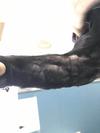
Sudden Itchy Welts All Over a French Bulldog Not rated yet
Reader Question My 2-year-old French Bulldog developed sudden itchy welts all over her body yesterday. Today she still seems unwell. Answer from …
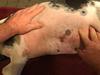
Blackhead-Like Bumps That Leak Dark Paste on a Catahoula Not rated yet
Reader Question Oakley is a spayed female Catahoula white leopard, approximately 4 years old. She eats canned dog food with a little high-protein dry …

A Couple of Pimples Near a Young Vizsla's Penis Not rated yet
Reader Question Just noticed a couple of pimples near my dog's penis. Not on it but near it. My dog is a rescue Vizsla, male and 21 months old. I've …
Red Pimple-Like Bumps All Over a Pit Bull Mix Not rated yet
Reader Question My dog Buddy has large, red, pimple-like bumps all over his body. It started on the inside of his back legs and on his butt. I have …
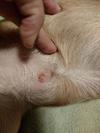
A Pus-Filled Blister With a Red Ring on a Chihuahua Not rated yet
Reader Question I am concerned about this "blister" on my 8-pound Chihuahua. It looks like a white, pus-filled blister surrounded by a red ring. There …
New Pimples on an Older Rat Terrier Not rated yet
Reader Question Get female miniature rat terrier 9 yrs.old,In the last year she's been getting pimples.She has no flieas. very clean dog.it seems not …
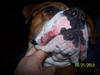
Recurring Muzzle Bumps in a Bulldog Boxer Mix Not rated yet
Reader Question Our American Bulldog and Boxer mix has had a problem on and off in the muzzle area since September. Two rounds of antibiotics cleared …
Concerned with Dog Ear Pimple Not rated yet
I have a 2 yr old Puggle that developed a pimple like sore on the outer rim of her ear canal. It's not a hematoma because it popped on its own and only …

Red Bumps on Dog Stomach Not rated yet
Reader Question: Pimples on dog stomach
My dog has developed several red bumps on his groin area (and one on his chest) in the last couple of days. …
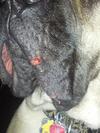
Pimples on a Young Mastiff's Lips That Became Large and Bloody Not rated yet
Reader Question My 14 month old English Mastiff occasionally develops small pimples. She is on day one of antibiotics for suspected kennel cough. We …
Small White Pimples Under the Chin and Chest Not rated yet
Reader Question My 6 year old King Charles Cross, has a number of small white pimles on his skin, under chin, and chest. They do not cause him any irritation. …
Bumps on a Scottish Terrier After a Short Groom Not rated yet
Reader Question I have a seven year old Scottish Terrier. He has recently developed small bumps or pimples on his skin. They are mostly on his back …
Bumps on a Young Pit Bull After Hot Weather and a Cactus Not rated yet
Reader Question We just started noticing these bumps on our 7 month old blue pit. We can't figure out what it is or how they started... but all around …

A Spreading Cluster of Papules on a Dog's Neck Not rated yet
Reader Question I have taken my dog to a dermatologist, he was tested for several skin conditions, all were negative which included bacterial and demodex. …
Sources and further reading
This article was rewritten and fact-checked on October 23, 2026 against current veterinary references and specialist guidelines:
- Loeffler A, Cain CL, Ferrer L, Nishifuji K, Varjonen K, Papich MG, Guardabassi L, Frosini SM, Barker EN, Weese JS. Antimicrobial use guidelines for canine pyoderma by the International Society for Companion Animal Infectious Diseases (ISCAID). Veterinary Dermatology, 2025.
- Hillier A, Lloyd DH, Weese JS, et al. Guidelines for the diagnosis and antimicrobial therapy of canine superficial bacterial folliculitis (Antimicrobial Guidelines Working Group of the International Society for Companion Animal Infectious Diseases). Veterinary Dermatology, 2014.
- Torres SMF. Idiopathic Keratinization Disorders: Canine Acne. In: Small and Large Animal Dermatology Handbook, Vol. 2. University of Minnesota Libraries Publishing, 2025.
- Clark MD. Pyoderma in Dogs and Cats. Merck Veterinary Manual, updated October 2025.
- White SD. Hives and Rashes (Urticaria) in Dogs. Merck Veterinary Manual (pet owner version), updated September 2024.
- MSPCA-Angell. Lumps and Bumps: When to Be Concerned. MSPCA-Angell, February 2026.
- Loeffler A, Cain CL, Ferrer L, et al. Synopsis of the antimicrobial use guidelines for canine pyoderma by the International Society for Companion Animal Infectious Diseases (ISCAID). Veterinary Dermatology, 2025.
- Warland J, Dobson J. Canine and Feline Skin Tumors. Veterinary Focus 21(3), 2011 (IVIS).
- Bensignor E, et al. Efficacy of chlorhexidine-impregnated wipes for local dysbiosis in atopic dogs. Veterinary Sciences, 2024.
- Dryden MW. Mite Infestation (Mange, Acariasis, Scabies) in Dogs. Merck Veterinary Manual (pet owner version), updated April 2026.
About this article
Last updated : written using the 2025 ISCAID pyoderma guidelines, the Merck Veterinary Manual, an open veterinary dermatology textbook, MSPCA-Angell and IVIS, plus International Veterinary Information Service (IVIS) proceedings and research published 2022 to 2026.
This page is for general information and is not a substitute for an exam by your veterinarian.
