Black Patches on the Ear Flaps Each Winter
by Beverly
Reader Question
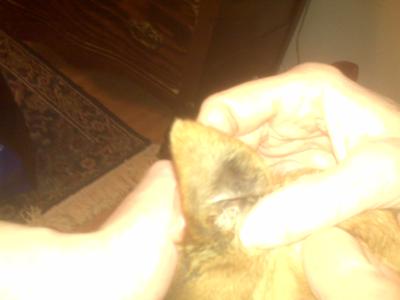
Our 5 year old male, 5 lb. Chorky, develops black skin on both ear pinnae starting in December. This is the third year he has "grown" black areas on the ear skin. The past two years, eventually the skin returned to normal fawn coloring after weeks of antibiotics and yeast and fungal medications. Last year it was over 6 weeks of topical/oral meds including a round of steroids. A scraping was done where yeast cells were seen. Fungus was negative. This year, the same Vet decided to wait and see if it goes away by itself. It is April and both ears now have the black skin with the right ear being only 3 weeks into the discoloration. If the pictures come through you will see that both spot areas are located in the same place on the ear. His diet is being changed again to a rice and lamb food from a combination of two other dry foods. His favorite is cooked chicken breast, 1/2 cup each evening and otherwise the dry food bowl is kept full and he eats at will.
His kennel has been covered with a towel through the winter coldness and I have wondered if this is a yeast that maybe it is staying too moist in the kennel. He also has 3 small blankets that he twirls himself in. The rest of his coat is smooth and soft, and of good color. I use a fatty acid shampoo from the vet. He is bathed about once a month. His bedding
is also washed. His teeth are descaled yearly. He does seem to shake his head at times and I have seen him scratch his ears but nothing over the top to say that he is annoyed. He has been on a monthly parasite preventive since a puppy and the same Vet hospital has cared for him. Also, he has one testicle, the other was un-descended and removed. I am going to try giving him salmon oil again. The first time I tried last year lasted one week before he refused to lick it up. I am wondering if these spots are common in Chihuahua/minature Yorky breeds. Any ideas? Beverly
Answer from Our Team
Darkening that comes back on the ear flaps each winter, with yeast seen on a scraping, sounds like a recurring yeast (Malassezia) skin infection, often triggered by an underlying allergy. Darkening is the skin's reaction to ongoing inflammation. Scratching and head shaking fit too.
Ask your vet whether ear cytology at the first sign of darkening would help, along with treatment of the ear canals if needed and an allergy workup or food trial. Ask too whether a regular antiseptic and antifungal wipe or cleanser could prevent flare-ups. Damp bedding isn't a proven cause, but keeping his bedding clean and dry is sensible.
Some small breeds, including Chihuahuas, can get a non-itchy thinning of hair on the ear flaps called pattern baldness, so your vet may suggest a biopsy if yeast treatment doesn't help.
See black skin in dogs.
This is general information, not a diagnosis. Please follow your own vet's advice.
Click here to post comments
Join in and write your own page! It's easy to do. How? Simply click here to return to Skin.

