Causes Overview
When diagnosing dog skin disorders a veterinarian will start with the most common causes and then move on to those that are less common. Steps such as a history and clinical examination will help to narrow down the possibilities before ordering tests. Skin problems tend to vary by:
- Breed: Certain breeds are know for certain skin problems.
- Age: Skin conditions in younger dogs may indicate a genetic (inherited) problem. Young dogs are more susceptible to fleas, mange, bacteria (impetigo) and fungal dog skin infections. Older dogs are more susceptible to cancerous conditions (neoplasia).
- Time: How long has a dog been suffering from the condition and how did it change over time. Skin conditions that happen quickly could be mange (scabies) or a skin allergy due to food.
- Itch: Itchy dog skin itself doesn't indicate a specific skin condition, however, if the skin is itchy and there are no lesions, the problem could be allergy, mange or infection.
- Diet: It is possible for dogs to have a reaction to foods that they have eaten for years, but then suddenly develop an allergic response.
- Time of Year: Problems that only occur seasonally could be a reaction to environmental factors such as pollen.
- Human Skin Conditions: Problems such as mange and scabies can spread from dogs to humans and back the other way.
- Location on the Body: Canine
skin conditions on different areas of the body point to specific
problems.
Dog Skin Conditions by Body Area
| Body Area | Possible Dog Skin Disorders and Cause |
| Ear Canal | Allergic reaction to food or something in the environment such as pollen, parasites, tumor, reaction to an endocrine (hormone) system problem |
| External Part of the Ear | Allergic reaction to food or in the environment, scabies (mange), inflamed blood vessels (vasculitis), immune skin reaction (pemphigus foliaceus) |
| Head and Face | Mange (scabies), Allergic reaction (atopy to food, insect or something in the environment)), Infection (dermatophytosis), DLE (discoid lupus which appears as coin shaped red bumps under the skin), immune system skin reaction (pemphigus foliaceus). In dogs under 2 years of age, papules or dog warts can be found in and around the mouth. |
| Paws | Mange, allergic reaction, skin inflammation (itchy pink or red rash), immune system reaction, |
| Claws | Infection (bacterial or fungal), injury, immune system problem, skin disease |
| Tail Base | Fleas |
| Near Reproductive Organs | Canine warts start as papules (round raised areas), and can then develop into cauliflower shaped warts. They are caused by the papilloma virus and do not require treatment if not causing your dog any discomfort or bleeding. Dog skin disorders that involve canine warts are also found around the eyes and inside the mouth and nose, in dogs under 2 years of age. Dogs older than 2 years of age are usually immune to dog mouth warts. |
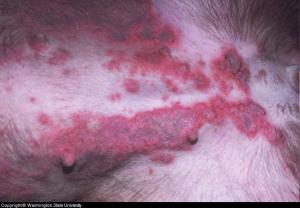
Dog
Skin Disorders include
superficial skin infections such as this one on the abdomen of a
Labrador
Source: Washington State University College of Veterinary Medicine
Appearance and Dog Skin Problems
The shape and how wide spread the dog skin disorders are inform the diagnosis process. The following chart details various types of appearances and the possible causes.
| Appearance | Possible Cause of Dog Skin Disorders |
| Contained or localized in one area | Dog skin Infections (bacteria or fungal cause such as a yeast infection in a dog or dog staph infection (often seen on dog abdomen). |
| Symmetry (if the lesion could be folded in half, are both sides the same or different) | Hypothyroidism, Allergy |
| Not Symmetric | Mites, Dog skin fungus infection |
| Dull Hair | Hormonal disease (hypothyroidism, hyperadrenocorticism) |
| Hair or Skin Color Change | Hormonal disease, abnormal tissue growth (follicular dysplasia). Conditions such as dog black skin disease. |
| Lump on Dog Skin | Insect bite, hematoma (blood), oedema (fluid buildup in cavity), cysts, inflammation |
| Dog Skin Pimples | Parasites, infection, allergy, fungus |
| Lump under Dog Skin | Tumor (benign, due to injury or trauma, vascular, smooth tissue). Could also be a dog skin wart or papilloma. |
| Cyst on Dog | Benign skin growths that appear on the surface of the skin. Most dog skin cysts are benign. A biopsy is sometimes needed to confirm that the cyst is not malignant (cancerous). |
Dog Skin Conditions Pictures and Descriptions
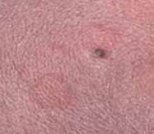
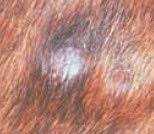
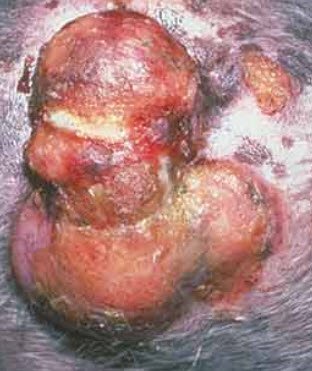
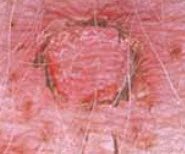
The actual look or shape of the dog skin disorders or dog skin irritation can indicate its cause as well. Common skin issues include:
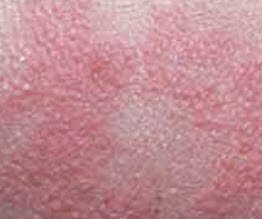
Papules: A dog skin papule is a small solid inflamed area that does not contain pus. It indicates bacterial infection, mosquito bite reaction, scabies, allergy or an auto-immune skin condition.
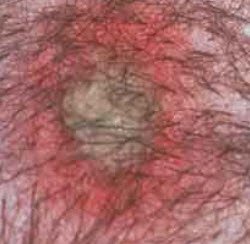
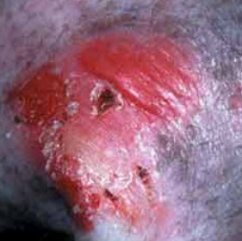

Dog Skin Rash
Dog skin rash is a symptom of other underlying dog skin disorders. Possible causes include allergy or parasites (fleas, mites, lice). Follow this link for photos of dog skin rashes and information on their diagnosis and treatment.
Dog Skin Lesions
Dog skin lesions is a general term that refers to dog skin disorders that involve accumulation of dead skin tissue. Lesions can be caused by any of the problems described on this page such as injury/trauma, parasites or infection. Chronic canine skin lesions are filled with puss and require that they be drained as part of treatment.
Treatment of Symptoms
Medicated Shampoo: This approach to dog skin disorders is not a cure, since it doesn't address the underlying problem that causes a dog skin problem. Instead it is used to manage symptoms. Specific types of shampoos and their use is as follows:
| Dog Skin Disorders | Active Ingredient | Dog Shampoo Brands | Duration |
| Bacterial Infection, Fungal Infection, | Chlorhexidine | Douxo | 1 - 14 days |
| Bacterial infections, greasy skin | Benzoyl Peroxide | Vet Solutions BPO | 7 - 14 days |
| Skin pus | Ethyl lactate | Dermapet | 7 - 14 days |
| Skin pus, may help with fungal infection | Iodine | Durvet Naturals Iodine Shampoo | 7 - 14 days |
| Oily skin, scales on the skin (Seborrhea) | Sulfur | Pure Care Shampoo | 3 - 14 days |
| Seborrhea (flakes of dead skin) | Salicylic acid | Pure Care Shampoo | 3 - 14 days |
| Oily skin, scales on the skin | Tar | Bio-Med Tar Sulfur Shampoo | 3 - 14 days |
| dog Itch skin shampoo, dry skin | Colloidal oatmeal | DermaPet Oatmeal Shampoo | 2 - 14 days |
Treatment of Dog Skin Disease by Type
Dog Skin Infection Treatment
Treatment for dog skin infection varies by the types of dog skin disorders:
Bacterial Skin Infection as cause of Dog Skin Disorders: Like most infections, antibiotics are used when a bacterial problem is diagnosed. Bacterial infections are often caused by another condition (secondary infection) such as allergy, an immune mediated skin reaction or a hormonal problem (endocrine issue). There are different types of bacteria that can lead to a bacterial skin infection in dog. Testing will determine the specific type of canine bacterial skin problem to be treated. Antibiotic therapy usually lasts for 3 to 12 weeks depending on the severity of the condition.
Canine Fungal Skin Infection as cause of Dog Skin Disorders: A dog fungal skin infection is diagnosed with a device called a "woods lamp" which is used to check skin appearance under the light. Skin scraping tests will confirm any diagnosis that is made. A class of medications called antimycotic agents are prescribed to treat canine fungal skin infection. These include Griseofulvin (administered with meal) and Ketoconazole (tablets). Side effects of treatment can include vomiting, diarrhea and nausea depending on the medication selected.
Tests will be conducted 2 and 4 weeks after testing to confirm that all of the dog skin disorders have been properly treated.
Allergy Canine Skin and Itchy Dog Skin
One reason for itchy dog skin is an allergic reaction. Like allergy shots in humans, this approach has been researched for dogs. In studies, reducing the sensitivity to specific allergens such as pollen was successful 45% to 60% of the time for 1 year or longer. Shots are required for 1 year or longer. Results can be seen between 4 weeks to 12 months with the average dog improving in 4 to 6 months.
Even with allergy shots, many dogs will require other supportive therapies for canine allergy skin such as the use of antihistamines.
Canine Seborrhea
Canine seborrhea refers to a condition where the skin accumulates a protein called keratin which begins to build up and blocks normal functioning of the sebaceous glands, which are located at the base of the hair follicles. This causes the dogs hair to become greasy and the skin to become dry. In addition to changes in skin and coat condition dogs can develop fever and skin infection. There are multiple underlying causes that need to be eliminated, with the specific cause addressed during treatment.Possible causes of canine seborrhea include congenital or inherited (certain breeds are predisposed), allergy, parasites or an endocrine system problem (hormonal). Treatment for seborrhea in dogs involves the elimination of the underlying cause, cleansing lotions and natural remedies that boost immune system strength and skin and coat condition such as Skin and Coat Tonic and Immunity and Liver Support.
Treating Dog Skin Itch
Antihistamines: In addition to allergy therapy, antihistamines could help a dog suffering from dog skin disorders such as skin itch. Common antihistamines for itchy dog skin include Dexchlorpheniramine, Chlorpheniramine and Cyproheptadine, all three in tablet form. This type of therapy has few side effects with the exception of making a dog feel drowsy. This side effect will have less of an impact as a dog undergoes treatment.
Treatment is required 2 to 3 times a day. Another issue is that this approach is only successful in 5% to 30% of the time. That said, if a specific dog responds to treatment, then it is a safe approach to treating itchy dog skin.
Fatty Acids: These are know as essential fatty acids are are a common supplement for helping as a convenient home remedy for dog itchy skin and dog skin disorders. Acids such as linoleic (sunflower, safflower, primrose oil) and eicosapentanoic acid (fish oil) all help with skin inflammation. There is a low success rate with this approach, however, for dogs that respond, it could be effective. Do not expect improvement for several weeks. When provided in conjunction with conventional approaches such as steroids, it could help to reduce the dose of the steroid.
Glucocorticoids: This approach is a common conventional approach to treating dog itchy skin. There is a high success rate with this approach at a low dose (prednisolone). Treatment lasts for 1 to 2 month with dosages administered every other day. Side effects includes excessive thirst, urination and eating. Another side effect is that it could trigger a urinary infection, skin infection or infection in the lungs. Treatment may only be needed during the seasons where your dog is reacting to a specific allergen.
Homeopathic Remedies: There are several herbs that have properties associated with helping dog's with itch. itch is caused by a slight weakening of the protective outer skin layer. Once weakened, the nerve endings become inflamed causing itch. The thought behind homeopathic products such as PetAlive Allergy Itch Ease, is that the skin can benefit from an added level of support.
Dog Skin Allergies From Food
If you suspect a food allergy, the best approach is to try a hypoallergenic test diet where the number of ingredients in a dog's diet is minimized. Do not provide treats or other food during the test period. A diet needs to be tested for 10 weeks to see if there is any improvement. One new diet worth considering is Purina HA Hypoallergenic that makes proteins in the diet non allergenic. This could be a convenient way to see if proteins are the cause of the problem. Usually a sensitive skin dog food contains one simple protein such as fish and a simple carbohydrate such as potatoes, with no artificial ingredients, flavors or coloring.
Parasites
There are several types of parasites that can cause dog skin disorders such as dog flea dermatitis, canine scabies, canine lice and dog chiggers. The following table lists the active ingredient and typical products, when available over the counter, for each condition.
| Problem | Active Ingredient |
Possible Side Effects |
Brands |
| Canine scabies, heart worm, Lice | Ivermectin (topical or oral) | Tiredness, tremors, coma, respiratory problems, muscular coordination problems (ataxia) | Heartgard |
| Heartworm preventive,
controls hookworms, and removes and controls roundworms and whipworms. Also used in dogs with certain types of mite infestations (mange) |
Milbemycinoxime Oxime (tablet) | Safe, Not for use in
Collies or other herding breeds over the recommended heartworm prevention dose (unless advised by veterinarian), Do not use in puppies less than 4 weeks of age or less than 2 pounds |
Interceptor Sentinel (also contains lufenuron for prevention and control of flea infestations by stopping flea egg development ) single ingredient) |
| Fleas | Lufenuron (tablet given 1x per month with meal) | Safe | Program |
| Mange, Scabies | Amitraz (dip) | Sedation, low body temperature (hypothermia), high blood sugar (hypoglycemia), low blood pressure (hypotension) | Mitaban |
| Mange Scabies, Chiggers | Lime sulfur (dip, available over the counter) | Very safe, every for puppies. | Naturasil for Pets |
| Fleas, Ticks, Scabies prevention | Fipronil ( most commonly used ingredient in insecticides called arylheterocycles.) | Irritation (temporary) | Frontline Frontline Plus (mixed with methoprene to provide protection against all flea life stages - frontline alone does not prevent the development of flea eggs and larvae. |
| Adult Fleas, and Prevent Flea Eggs From Hatching. Prevents Heartworm Disease, Controls And Treats Ear Mite Infestation, Sarcoptic Mange, And The American Dog Tick | Selamectin | Reversible hair loss | Revolution |
| Fleas, before they lay eggs and flea larvae before they hatch | Imidacloprid (1x per month liquid, kills fleas on contact) | Nontoxic | Advantage |
| Fleas | Pyrethrin (spray, powder) | Tremor, vomiting, depression, seizures | Bio-Groom |
| Fleas | Permethrin (spray, powder) | Tremors, vomiting, depression, seizures | K9 Advantix |
| Fleas | Nitenpyram | Safe | Capstar (oral tablet) |
Specific Recommendations by Dog Skin Parasite:
Fleas in Dogs: There are many types of products to help with fleas in dogs. Treatment usually lasts from 4 to 6 weeks. If a dog is sensitive to a flea bite (flea-bite hypersensitivity) then usually a insect growth regulator (interrupts the flea lifecycle) and a product that kills fleas (adulticide) are recommended. Common ingredients for IGR's are Fenoxycarb, Lufenuron and Methoprene/Pyriproxifen, and for Adulticides are Fipronil, Imidacloprid, Nitenpyram, pyrethrin, permethrin and selamectin. Products come in a spot-on topical or spray form.
Specifically, consider a monthly prevention product for dog skin disorders such as Program, Sentinal or Frontline Plus.
Dog Mange and Canine Scabies: Sarcoptic and demodectic (demodex) mange is caused by mites that burrow into a dog's skin causing itch. Dog's that scratch could cause a secondary infection. Mange can spread throughout a dog's skin. A safe effective option for treating mange is a lime sulfur dip such as Naturasil. It mixes with a dog's shampoo to help with familiarity for the dog being treated. Amitraz and Paramite dips are only available with prescription for demodex. For Cheyletiellosis mites (rabbit mites), the prescription Ivermectin is used or the over the counter lime sulfur products.
Symptoms of mange include bald spots anywhere on the body including the face, neck, legs, eyes and head. Dog's may avoid eating or have reduced energy levels. With treatment, mange treatments will need to continue for 1 to 6 months.
Over the counter lime sulfur dips are just as effective as prescription products with fewer side effects.
Canine Dry Skin: Dry dog skin has many causes including nutrition issues, bathing and grooming (particularly in long hair dogs), infection and parasites. If environmental factors are thought to the be the cause, then treatment usually starts with a cleansing shampoo that has the sudsing and cleaning action to deep clean a dogs coat and skin. Medicated canine shampoos as indicated above can be of help in specific instances. Other topicals are available from a veterinarian. Homeopathic remedies such as PetAlive Skin and Coat Tonic for Healthy Skin and a Glossy Coat and a multi-vitamin made for dogs may also help provide added skin support.
Ask Our Vet A Question
Have A Question About a Dog Skin Problem For Our Editors or Helpful Story to Share?
Do you have a question for our editors or a helpful story about this? Share it!
Please include the age of your dog, breed, the area of the body, your dog's general health and any changes in diet, appetite, behavior, skin and coat. Let us know about any treatment that is currently under way including the names of medications or any other information that could help our editors provide an answer.
If possible, please submit a picture of the skin condition below.
We will do our best to get back to you quickly (it depends on how many questions we receive each day). If you do require an immediate response we suggest using this online dog veterinary service that is available now.
Other Reader Questions and Suggestions from Our Vet on Dog Skin Diseases and Conditions
Click below to see contributions from other visitors to this page...
Bump On Side Of Dog 
Reader Question: What Can Cause A Bump On A Dog's Side?
My 7 year old hound mix, spayed house dog has an odd looking wheal on her side. It is completely …
Dog Skin Itch
Reader Question:Dog Skin Itch
My 2 dachshunds have developed areas where they are peeling like sunburn. Some areas have pimple like nodules that …
Dog Has A Round Bald Patch
Reader Question: What Is The Cause Of This Red Spot On My Dog’s Skin?
My older lab has a round bald patch on the outside of one of her hips. The …
Recurring Missing Dog Fur Patches
To whom it may concern,
I have a 10 year old pittbull/mastif mix. When he was 7 weeks old I noticed the lymphnodes under his cheeks were larger than …
Diagnosis of a Chronic Dog Skin Problem
Reader Question : How to Diagnose a Chronic Dog Skin Problem
I love my dog! Rebel is a great 15-year-old English Cocker with chronic skin problems …
Black spot on Dog Vulva
Hello,
I hoping someone can help me or my dog that is. She is a 13 year old black lab. And I have recently found this black spot on my dogs vulva. …
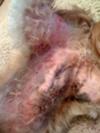
Dog Skin Rash Treatment
Reader Question: My shih-tzu Ernie developed a dog skin rash about 3 months ago. The vet said it was a staph infection and prescribed antibiotics. …
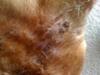
Dog Black Skin Disease
My English Bulldog has small black bumps on his back with hair loss in these areas.
I would like to know what it could be. I have put bug balm on this …

Hair Loss Around Canine's Neck 
Reader Question: What Is Causing My Dog To Lose Hair Around Its Neck?
I have a beagle/pug mixed dog, Bruno, who just turned a year old. In the first …

Dog Cyst Care and Treatment
Question: Dog bumps on neck About a month ago we noticed a small bump on the back of my dogs neck. Then about a week ago my Mom came to visit and I had …

American Bulldog's Recurring Skin Disease
Reader Question: What Is The Cause Of My Dog's Recurring Skin Disease?
Hi
I'm so stressed about my dog's skin condition...Her skin problem started …
Treating Black on Dog Skin Not rated yet
Reader Question: How do I treat and diagnose dark spots on dog skin that are only partially responding to treatment
Hi Dr. Coates,
I adopted …
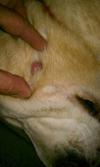
Nickel Size Lesion on Dog Face Not rated yet
Reader Question: Cause of Lesion on Cat Face
My 10 year old labrador has "lesions" throughout her body the size of a pimple (most are black)but this …
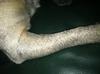
Darkened Skin and Excessive Licking of Paws Not rated yet
Reader Question: How To Stop Canines From Licking Their Paws?
I have two male fawn pugs (ages 8 and 10, not related) with excessive paw licking. …
Dog With Sores and Puffy Eyes Not rated yet
Reader Question: What Causes A Dog's Eyes To Become Puffy and Develop Hard Sores On It's Hind?
My dog started with an odd lump under her shin that …
Does My Dog Have Lice? Not rated yet
Reader Question: Does My Dog Have Lice?
My 5 mo old Yorkie, mini sleeps with me and in the am I notice small caramel colored firm flakes in the bed. …
Puppy Head Wound Will Not Heal Not rated yet
Reader Question Puppy Head Wound
Hi..hope you can advise me..
I believe that a week or so ago my pup cut the top of her head running through brambles...I …
Dog Skin Lesions on Upper Back Not rated yet
I have an 8 year old lab who recently developed several skin lesions on his upper back. No change in diet, shampoo or routine. Size of lesions range from …
Puppy Skin Vaccine Lesion Not rated yet
My staffi pup is one of the few puppies to contract Parvo virus post vaccination...she now has large dense area on shoulders of approx 6cm x 4cm approx …
Are dogs allergic to plant fungul spores? Not rated yet
I have been working with my vet for about 2 years to try to resolve the itching problem for 2 of my dogs. We have done the food allergy routine but they …

Black Flakes on Dog Skin Not rated yet
i have a shih tzu that just turned 11 yrs. old. her skin is peeling and flakes are all over her back. there are hundreds of black flakes. i brushed …
Does my Golden Retriever have a skin infection? Not rated yet
Reader Question on Possible Skin Infection Followed by Suggestion From Our Vet
I was out of town for 3 days and when I came back I noticed a scab about …
Dog Itchy Skin Diagnosis and Treatment Not rated yet
Our dog named Rider, who is a 1 yr old pure bred Bichon, has been having a very 'ruff' time with his skin. In late March he took a tumble down the stairs …
Dog Losing Hair Not rated yet
I have an 11 year old Chihuahua. He is losing dog hair in patches. You can look at him and it looks like his fur is sticking up. When you barely pull …
Brochures on Canine Skin Problems:
|
|
