Hookworms are small intestinal worms that latch onto the lining of a dog's gut and feed on blood. In puppies they can cause severe, even fatal, anemia, while adult dogs often carry them with few signs.1,2 Dogs catch hookworms by swallowing larvae, through the skin, or from their mother's milk.2 Hookworms are becoming more common in the US, and some are now resistant to several dewormers, so testing and follow-up matter more than ever.3,2,4 This guide covers the signs, how dogs get hookworms, treatment, drug resistance, prevention and the risk to people.
See a vet right away if your dog or puppy has:
- Pale gums, weakness or collapse, which can mean serious blood loss5,1
- Dark, tarry or bloody diarrhea1,5
- Poor growth or weight loss, especially in a young puppy5
Puppies can become very sick from hookworms before any eggs show up in a stool test, so don't wait for a positive test if a puppy looks unwell.1
What the Research Shows
- Blood feeders. A single hookworm can remove up to 0.1 mL of blood a day, and anemia in heavily infected puppies is often fatal.1
- On the rise. Hookworm positivity in US dogs rose 47% between 2012 and 2018, from 2.02% to 2.96% of fecal tests.3
- The most common worm at dog parks. In a 2019 study of 288 US dog parks, 7.1% of dogs had hookworms.6
- Drug resistance is widespread. About 1 in 10 hookworm-positive US dog samples (10.6%) carried a genetic marker of resistance to a common dewormer class, rising to about 24% in Florida.7
- Not just greyhounds. Multi-drug-resistant hookworms, first found in racing greyhounds, have now been identified in more than 70 breeds.8
What Are Hookworms?
The main dog hookworm in North America is Ancylostoma caninum; others include A. braziliense and Uncinaria stenocephala. Adults are only about 1 to 2 cm long and attach to the intestinal wall.2,5,4 They are far more common in warm, humid areas: prevalence ranges from under 5% in the western US to as high as 36% in the Southeast.2
How Do Dogs Get Hookworms?
- Through the skin: larvae in contaminated soil or sand burrow in, often through the paws.2,5
- By swallowing larvae from the environment while sniffing, licking or grooming.2
- Through the mother's milk: puppies can be infected while nursing and get sick within their first weeks.2,1
- By eating infected animals such as rodents.2
Larvae can become infective in the soil within days and survive there for weeks to months.2,5
Signs of Hookworms in Dogs
- Pale gums and weakness from anemia5
- Diarrhea that may be bloody, or dark and tarry in severe cases1,5
- Weight loss, poor growth and a dull coat5
- Skin irritation and itching, especially of the paws, where larvae have burrowed in (more likely in heavily contaminated areas)5,1
Healthy adult dogs may carry a few hookworms without obvious signs.1
Diagnosis and Treatment
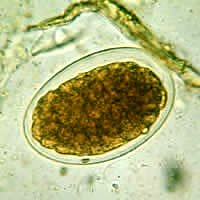
Hookworms are diagnosed with a stool test. Eggs take about 2 to 3 weeks after infection to appear, so very young puppies can be infected before a test turns positive.5,1 Treatment is a dewormer from your vet, repeated after a few weeks because the drugs kill adult worms but not all developing larvae.5 Dogs with severe anemia may also need supportive care such as supplemental iron or, in rare cases, a blood transfusion.1,5
A follow-up stool test after treatment is important. If eggs are still present, your vet may run a test that compares egg counts before and after treatment to check for drug resistance.2,1
Drug-Resistant Hookworms
Multi-drug-resistant hookworms are a growing problem in the US. In one study, hookworms from three dogs survived all three classes of approved dewormers; one standard drug reduced egg counts by 0%.4 Greyhounds from racing kennels were affected first, but resistant worms are now found in many other breeds.4,8 Resistance is more likely if hookworm eggs persist after repeated treatment, or if your dog is a retired racing greyhound.4,8 Your vet can test for resistance and choose an alternative treatment plan.2,8
How to Prevent Hookworms
Can Humans Get Hookworms From Dogs?
Yes. Dog hookworm larvae can burrow into bare skin and cause cutaneous larva migrans: intensely itchy, raised, red, winding tracks, usually on the feet or legs.11 The tracks can move a few centimeters a day, and most people recover without treatment in 5 to 6 weeks.12,11 Wearing shoes outdoors, avoiding sand and soil where dogs defecate, and picking up after your dog help prevent it.11,10
See worms in dogs and roundworms in dogs.
Frequently Asked Questions
What are the symptoms of hookworms in dogs?
Pale gums, weakness, bloody or dark diarrhea, weight loss and poor growth. Many adult dogs show no signs.
Can you see hookworms in dog poop?
Rarely. They're small and stay attached to the gut, so they're usually found by a stool test.
How do dogs get hookworms?
By swallowing larvae, through the skin, from their mother's milk, or by eating infected rodents.
Are hookworms dangerous for puppies?
Yes. Heavy infections can cause life-threatening anemia in young puppies.
How long does it take to get rid of hookworms?
Treatment is repeated over several weeks, followed by a stool test. Resistant infections can take longer.
Can humans get hookworms from dogs?
Yes. Larvae can burrow into bare skin and cause itchy, winding tracks.
How do I get rid of hookworms in my yard?
Pick up feces daily and keep your dog on a preventive. Larvae can survive in soil for weeks to months.
Ask Our Team a Question
Have a Canine Tapeworm Question for our Editors?
Have a Question, Request or Want to Share a Story that could help others? Our editors and pet health professionals will answer 1 question per week for free!
Please be sure to include important information such as breed, age, medications and medical history.
If you need an immediate reply, we'd suggest using an online veterinary service that can provide immediate answers to your questions.
Sources and further reading
This article was written and fact-checked on October 16, 2026 against current veterinary references and specialist guidelines:
- Merck Veterinary Manual. Hookworms in small animals.
- Companion Animal Parasite Council. Hookworms guideline. CAPC.
- Drake J, Carey T. Seasonality and changing prevalence of common canine gastrointestinal nematodes in the USA. Parasites & Vectors, 2019.
- Jimenez Castro PD, Howell SB, Schaefer JJ, et al. Multiple drug resistance in the canine hookworm Ancylostoma caninum: an emerging threat? Parasites & Vectors, 2019.
- Weir M, Ward E, Panning A. Hookworm infection in dogs. VCA Animal Hospitals, 2025.
- Stafford K, Kollasch TM, Duncan KT, et al. Detection of gastrointestinal parasitism at recreational canine sites in the USA: the DOGPARCS study. Parasites & Vectors, 2020.
- Leutenegger CM, Lozoya CE, Tereski J, et al. Emergence of Ancylostoma caninum parasites with the benzimidazole resistance F167Y polymorphism in the US dog population. International Journal for Parasitology: Drugs and Drug Resistance, 2023.
- Leutenegger CM, Evason M. Drug-resistant hookworms in North America. Today's Veterinary Practice, 2024.
- Companion Animal Parasite Council. Ascarid (Toxocara canis, Toxascaris leonina) guideline. CAPC.
- Companion Animal Parasite Council. General guidelines for dogs and cats. CAPC.
- Centers for Disease Control and Prevention. About zoonotic hookworm. CDC.
- Merck Manual Professional Version. Cutaneous larva migrans.
About this article
Last updated : new page, written using Companion Animal Parasite Council guidelines, CDC, national US parasite studies, drug-resistance research, the Merck Veterinary Manual and VCA.
This page is for general information and is not a substitute for an exam by your veterinarian.
