Hip dysplasia is a developmental condition in which the ball and socket of the hip joint don't fit together snugly. The loose joint wears unevenly and, over time, leads to arthritis.1,2 It is most common in large and giant breeds, and genes are the biggest single risk factor, although fast growth, excess calories and body weight also play a part.1,2 Many dogs with hip dysplasia never need surgery and live comfortably with weight control, exercise and pain relief.2,3 This guide covers the signs, causes, breeds at risk, how vets diagnose it, the treatment options, prevention and what life looks like for an affected dog.
See a vet if your dog or puppy:
- Has a swaying or "bunny-hopping" gait, with both back legs moving together2,4
- Struggles to get up, is stiff after rest, or won't use stairs or jump into the car5,4
- Limps on a back leg, especially after exercise2,5
- Is losing muscle over the hind legs and shifting weight onto the front legs4
Some surgeries that can change how the hip develops only work in young puppies, so get a growing large-breed puppy checked early if anything looks wrong.1,2
What the Research Shows
- Lean dogs get arthritis years later. In a lifetime study of 48 Labrador Retrievers, hip arthritis first showed on X-rays at a median age of 6 years in freely fed dogs vs 12 years in littermates fed 25% less.6
- And they live longer. The lean-fed Labradors lived to a median of 13 years vs 11.2 years (a study sponsored by a pet food maker).7,8
- Genes matter, but so does environment. In 13,124 Australian German Shepherds, heritability of hip scores was about 0.30, meaning roughly 30% of the variation was genetic.9
- Early neutering is linked to higher risk in some breeds. 10% of male Golden Retrievers neutered before 12 months had hip dysplasia, double the rate in intact males.10
- Most dogs can be managed without surgery. Up to 76% of severely dysplastic dogs with arthritis can live comfortably with conservative care, according to the Orthopedic Foundation for Animals.3
What Is Hip Dysplasia in Dogs?
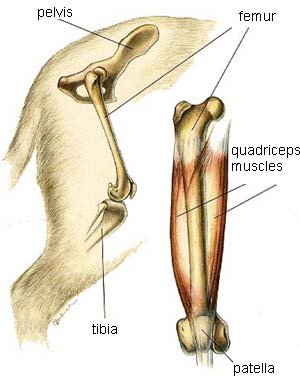
The hip is a ball-and-socket joint: the round head of the thigh bone (femur) sits in a cup in the pelvis called the acetabulum. In hip dysplasia the joint develops loosely during growth. That looseness (laxity) lets the ball slip around in the socket, which damages the cartilage and leads to arthritis.1,2
Vets see two broad groups. Young dogs, often under a year old, have loose hips but no arthritis yet. Mature dogs have arthritis that has built up from the loose joint over years.1 Many affected dogs show no obvious signs, and X-ray findings often don't match how lame a dog is: some dogs with bad-looking hips move well, while others with milder changes are sore.1,5,3
Signs of Hip Dysplasia in Dogs
- Stiffness, especially after rest or first thing in the morning4
- Difficulty getting up, lying down or climbing stairs5,4
- A "bunny-hopping" gait, with the back legs held close together and moving at the same time2,4
- Swaying or wobbling of the hind end5
- Back-leg lameness that is worse after exercise2
- Loss of thigh muscle, with weight shifted onto the front legs1,4
- Reluctance to jump, and less activity1,11
Signs can appear as early as a few months of age but are most common between 1 and 2 years. Older dogs often show signs as arthritis develops.5,1 Dogs can show signs at any stage, and some first show them as adults, after years of gradual joint change.1,5 Other problems, such as a torn cruciate ligament, can look similar, so an exam is needed. See torn ACL in dogs.
What Causes Hip Dysplasia?
- Genes. Hip dysplasia is inherited through many genes, so two parents with normal hips can still have affected puppies, though the risk is lower.1,12,9
- Fast growth and too many calories. In one study, about two-thirds of free-fed puppies developed hip dysplasia, compared with about one-third of puppies fed measured meals.5,1
- Body weight. Overweight German Shepherd puppies were nearly twice as likely to develop hip dysplasia as normal-weight puppies.5
- Neuter timing. Studies in Golden and Labrador Retrievers link neutering before 6 to 12 months with more joint disorders. The link varies by breed and sex, so ask your vet about timing for your dog.10,13
- Exercise. Calorie intake and exercise level can affect how severe hip dysplasia becomes.3
Which Breeds Get Hip Dysplasia?
Hip dysplasia is most common in large and giant breeds, such as German Shepherds, Labrador and Golden Retrievers, St. Bernards and Old English Sheepdogs, and large mixed breeds.5,2 Some flat-faced breeds are at risk too: in Orthopedic Foundation for Animals (OFA) records, Pugs are among the breeds with the worst hip scores,14 and Bulldogs are also a recognized at-risk breed.5 Smaller dogs can be affected too.2,1 Screening figures come from X-rays that owners choose to submit, so they don't give an exact measure of how common the condition is in each breed.12,15
Small breeds are also prone to a different hip problem, Legg-Calvé-Perthes disease, in which the head of the femur loses its blood supply.16 See dog hip surgery.
How Vets Diagnose Hip Dysplasia
- Physical exam. Your vet checks gait, muscle, pain and range of motion. The Ortolani test, often done at puppy vaccine visits between 10 and 16 weeks, feels for a loose hip.1,2
- X-rays. Usually taken under sedation to show the hip shape, laxity and any arthritis.1,2
- OFA hip evaluation. Radiologists grade the hips as Excellent, Good, Fair, Borderline, Mild, Moderate or Severe. Dogs must be 24 months old for certification; preliminary readings are possible from 4 months.3,12
- PennHIP. A special X-ray method that measures laxity as a distraction index (DI). It is accurate from 16 weeks of age, and hips with a DI below 0.30 are considered tight and rarely develop arthritis.17,1
- BVA/KC hip scoring. In the UK, each hip is scored, and lower totals are better. Breeders are advised to use dogs scoring at or below the breed median.15
Genetic tests for hip dysplasia are available, but their value is still uncertain.5
Treatment Options
Non-surgical management
Most dogs with hip dysplasia don't need surgery.2 Conservative care focuses on:1,2
- Keeping your dog lean, one of the most helpful steps
- Regular, controlled, low-impact exercise such as leash walks and swimming
- Pain relief prescribed by your vet, usually an NSAID, with blood tests to monitor the liver and kidneys
- Omega-3 fatty acids, physical therapy and hydrotherapy
Never give your dog human pain relievers such as ibuprofen, naproxen or aspirin unless your vet tells you to.18 For more on long-term pain control, see arthritis in dogs.
Surgery
- Juvenile pubic symphysiodesis (JPS): a small surgery in young puppies that changes how the pelvis grows. It must be done before about 18 weeks of age, ideally around 16 weeks.1,19
- Triple or double pelvic osteotomy (TPO/DPO): rotates the socket to cover the ball better, for young dogs, ideally under about 10 months, without arthritis.1,3
- Total hip replacement (THR): replaces the joint with implants in grown dogs. In a UK registry, owners rated about 95% of results good or very good.20,1
- Femoral head ostectomy (FHO): removes the ball so a scar-tissue "false joint" forms. It tends to work best in smaller, lighter dogs.1,3
For recovery times, risks and costs, see dog hip surgery.
Can Hip Dysplasia Be Prevented?
- Choose a puppy from screened parents. Ask for OFA, PennHIP or BVA/KC hip results for both parents.12,15
- Feed measured meals, using a diet made for large-breed puppies, so your puppy grows steadily rather than fast.5,1
- Keep your dog lean for life. Lean-fed Labradors developed hip arthritis about 6 years later than their freely fed littermates.6
- Ask about early screening if you have a large-breed puppy, so that options such as JPS aren't missed.1
- Discuss neuter timing with your vet if you have a breed at higher risk.10,13
Living With Hip Dysplasia
With good management, many dogs with hip dysplasia live comfortably for years.3,2 Hip dysplasia can be painful, especially once arthritis sets in, so watch for stiffness, reluctance to move and changes in mood.1,4 At home:
- Use rugs or runners on slippery floors, and ramps for cars and furniture
- Give a thick, supportive bed
- Keep exercise regular and moderate rather than long bursts at weekends
- Avoid lots of jumping, rough play and repeated stairs
Many dogs can be kept comfortable for years. Decisions about euthanasia usually depend on whether pain can still be controlled and whether your dog can still enjoy daily life; your vet can help you assess that.3,21 If cost is a concern, ask about medical management or FHO before ruling out treatment.1,22 Long-term medication costs can exceed surgery costs in younger dogs.1 More reader questions are answered on our bone, joint and muscle questions page.
Frequently Asked Questions
What are the early signs of hip dysplasia in dogs?
Stiffness after rest, trouble getting up, a bunny-hopping gait, reluctance to use stairs and back-leg lameness after exercise.
At what age do dogs get hip dysplasia?
Signs can start at a few months old but are most common at 1 to 2 years. Many dogs show signs later, as arthritis develops.
Which dog breeds are most prone to hip dysplasia?
Large and giant breeds such as German Shepherds, Labradors, Golden Retrievers and St. Bernards, plus some flat-faced breeds such as Bulldogs and Pugs.
Are dogs in pain with hip dysplasia?
Often, especially once arthritis develops, but pain varies a lot between dogs. Your vet can prescribe safe pain relief.
How long can a dog live with hip dysplasia?
With weight control, exercise and pain management, many dogs live comfortably for years, though outcomes vary from dog to dog.
How much does hip dysplasia treatment cost?
Medical management costs least up front. Surgery ranges from about $1,200 to $3,000 or more for FHO to $3,500 to $15,000 or more per hip for a total hip replacement, depending on the clinic.
What should you not do with a dog with hip dysplasia?
Don't let your dog get overweight, don't give human pain relievers, and avoid lots of jumping, rough play and slippery floors.
Can hip dysplasia be cured?
Total hip replacement can restore near-normal function to a hip. Otherwise, treatment manages pain and slows arthritis rather than curing it.
Ask Our Team a Question
Have a Dog Hip Surgery Related Question or Helpful Story?
Have a Question, Request or Want to Share a Story that could help others? Our editors and pet health professionals will answer 1 question per week for free!
We will do our best to get back to you quickly (it depends on how many questions we receive each day). If you do require an immediate response we suggest using this online dog veterinary service that is available now.
What Other Visitors Have Asked About Canine Hip Surgery
Click below to see contributions from other visitors to this page...
Young Newfoundland With Severe Hip Dysplasia: Should the Breeder Tell Future Buyers? Not rated yet
Reader Question Hello- I have an 18 month old Newf puppy who was diagnosed with critical hip dysplasia. He was seen at a veterinary school by an orthopedic …
Two-Year-Old Dog Keeps Holding Up a Leg Not rated yet
Reader Question my dog is 2 years old and she is walking weired she is putting her leg up all the time what should i do im very scared. Answer …
Sources and further reading
This article was written and fact-checked on October 16, 2026 against current veterinary references and specialist guidelines:
- American College of Veterinary Surgeons. Canine hip dysplasia. ACVS.
- Lafuente P. Hip dysplasia in small animals. Merck Veterinary Manual, December 2025.
- Orthopedic Foundation for Animals. Hip dysplasia. OFA.
- Conklin MR. Signs of hip dysplasia in dogs. Zoetis Petcare (manufacturer).
- Llera R, Hunter T, Ward E. Hip dysplasia in dogs. VCA Animal Hospitals, 2023.
- Smith GK, Paster ER, Powers MY, et al. Lifelong diet restriction and radiographic evidence of osteoarthritis of the hip joint in dogs. Journal of the American Veterinary Medical Association, 2006.
- Kealy RD, Lawler DF, Ballam JM, et al. Effects of diet restriction on life span and age-related changes in dogs. Journal of the American Veterinary Medical Association, 2002.
- Nestlé Purina. Diet restriction can add nearly two more years of healthy life for canines. Purina News Center (study sponsor).
- Heritability and phenotypic variation of canine hip dysplasia radiographic traits in a cohort of Australian German Shepherd dogs. PLoS ONE, 2012.
- Torres de la Riva G, Hart BL, Farver TB, et al. Neutering dogs: effects on joint disorders and cancers in Golden Retrievers. PLoS ONE, 2013.
- American College of Veterinary Surgeons. Osteoarthritis in dogs. ACVS.
- Orthopedic Foundation for Animals. Frequently asked questions. OFA.
- Hart BL, Hart LA, Thigpen AP, Willits NH. Long-term health effects of neutering dogs: comparison of Labrador Retrievers with Golden Retrievers. PLoS ONE, 2014.
- Institute of Canine Biology. Latest OFA statistics for hip dysplasia (December 2016). 2017 (analysis of OFA data).
- British Veterinary Association / Kennel Club Canine Health Schemes. Hip scheme breed-specific statistics. BVA, 2025.
- Cornell University College of Veterinary Medicine, Riney Canine Health Center. Avascular necrosis of the femoral head (Legg-Calvé-Perthes disease) in dogs.
- Antech Imaging Services. PennHIP: measuring hip joint laxity.
- US Food and Drug Administration. Get the facts about pain relievers for pets. FDA, 2022.
- North Carolina State University College of Veterinary Medicine. New surgery for hip dysplasia. ScienceDaily, 2000 (university release).
- Henderson ER, Wills A, Torrington AM, et al. Evaluation of variables influencing success and complication rates in canine total hip replacement: results from the BVOA Canine Hip Registry. Veterinary Record, 2017.
- Gruen ME, Lascelles BDX, Colleran E, et al. 2022 AAHA pain management guidelines for dogs and cats. Journal of the American Animal Hospital Association, 2022.
- Lemonade. The costs of hip dysplasia surgery for dogs. Pet insurer guide, 2026.
About this article
Last updated : new page, written using American College of Veterinary Surgeons and Orthopedic Foundation for Animals guidance, the Merck Veterinary Manual, VCA and peer-reviewed research.
This page is for general information and is not a substitute for an exam by your veterinarian.
