Digestive System: Bowel
Types of Dog Bowel Problems:
The canine bowel or intestine is a vital part of the gastrointestinal tract. The intestine performs two different functions, i.e. absorption of digested nutrients into the blood stream and expulsion of waste from the body through bowel movements. Due to nature of its functions and its exposure to different pathogenic factors in digestive material, this part of the body may be affected by several different conditions. These conditions may be of any kind, i.e. infectious, non infectious, tumors, blockages, accumulation of gases, ulcers, and sometimes mechanical problems related with absorption of different components.
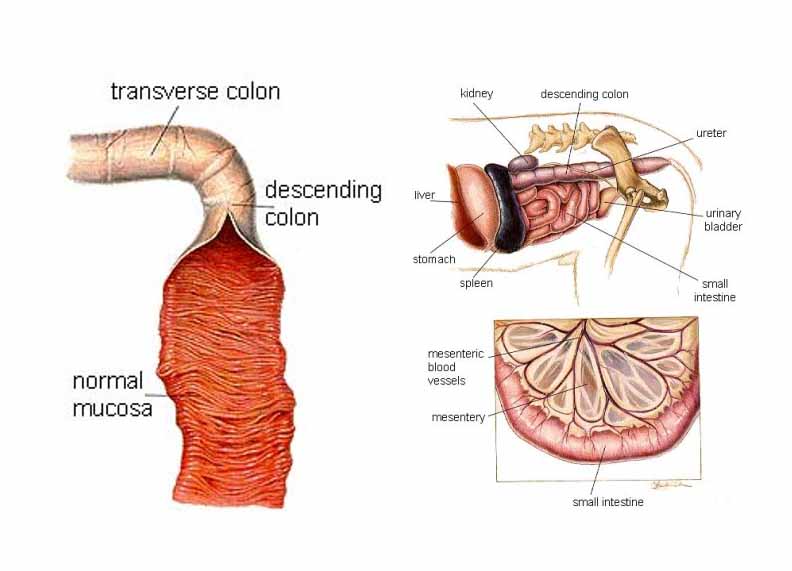
The Dog Bowel is comprised of the large intestine (left) and the small
intestine (right). Bowel problems located in each intestine will have
different causes and related symptoms.
Source:
The pictures in this section are reprinted with
permission by the copyright owner, Hill's
Pet Nutrition, from the Atlas of Veterinary Clinical Anatomy. These
illustrations should not be downloaded, printed or copied except for
personal, non-commercial use
The following is an overview of the most common dog bowel movement problems.
- Inflammation: Bowel inflammation refers to two different forms i.e. dog gastritis and dog colitis, i.e. of the small intestine and colon respectively. Inflammation is an immediate response of the body towards a pathological condition (disease) that causes swelling, redness, pain, loss of function and increased temperature over the bowel surface. Inflammation usually occurs in response to infections, injuries, ulcers and tumors.
- Infections: Different microorganisms such as bacteria, viruses and fungus may infect the bowel causing different health problems. Symptoms such as intestinal lesions, diarrhea, ulcerations and sometimes gaseous accumulation and blockage due to inflammatory swelling may occur.
- Infestations: Different parasites such as helminthes (parasites), protozoan etc can cause bowel problems in dogs by causing diarrhea, lesions, ulcers, and blockages or they can prevent absorption. These parasites not only cause health issues in dogs but also consume nutrients or suck blood from the dog’s body causing progressive weakness.
- Ulcerations
and
Tumors: Both of these are considered to be the most
complicated
conditions associated with a canine bowel. Ulcers are incurable lesions
caused
during infections, infestations or inflammations and remain
unattended. These are hard to recover and cause severe pain and
discomfort in the affected dog.
On the other hand, tumors (cancerous developments) which are uncontrolled growths may either cause a blockage or severe ulcerations and irrecoverable lesions on the surface of the bowel. These are considered to be incurable and the prognosis for both conditions remains low.
Diagnosis of Dog Bowel Problems:
Clinical symptoms such as abdominal pain, vomiting, diarrhea, constipation, the unusual appearance of feces etc commonly indicate bowel problems. To identify the exact issue and possible outcome a detailed clinical examination along with certain laboratory tests and x-rays might be needed. In more complex cases, like in the case of tumors, cancer or a blockage, exploratory surgery might also be needed for identification of the cause of the canine bowel problem and to determine the required treatment as well.
Treatment of Dog Bowel Problems:
Conditions relating to infections, infestations, inflammation etc are treated with specific drugs such as antibiotics, anti parasitic drugs and anti inflammatory drugs. Along with specific drugs certain other drugs might also be needed which help restrict digestive activity until recovery.
Feeding adjustments and special foods might also be needed to prevent any complications and to support recovery. Surgery is the treatment of choice in cases of bowel obstructions, tumors or cancers. Exploratory surgery performed for making a diagnosis is turned into the actual treatment; sometimes more then one surgical operation might be needed in complicated cases and when there are distributed cancerous tumors over the bowel.
Additional support may be administered with supplements, and are recommended once the dog resumes eating. These can be added to dog food and water.
Natural remedies are another option to keep bowel movements normal, for help in maintaining a limited microbial population and to prevent the accumulation of gases, thus keeping the bowel healthy. Bowel problems and natural products that could help regulate the bowel include:
| Problem in Dog Bowel | Natural Product Recommendation |
| Liquid Absorption in the Bowel and Intestines | Digestive Support Formula |
| Regulate Bowel Movements and Constipation | Natural Moves |
| Treat digestive tract parasites, to naturally repel parasites such as heartworm, roundworm and tape worm | Parasite Dr. Capsules |
| Optimization of Bowel Physiology and to Naturally Stop Dog Diarrhea | RuniPoo Relief |
|
|
