Cancer: Bone
Types:
Most cases that are reported are usually malignant (fast growing, cancerous) in nature, 80% of those are osteosarcomas. It is estimated that canine bone cancer is the most commonly occurring cancer in dogs, for the reason that either primary bone cancer occurs, or it is transmitted from other organs or systems to the bones, which is known as a secondary bone cancer. Osteosarcoma is a primary type of dog bone cancer.
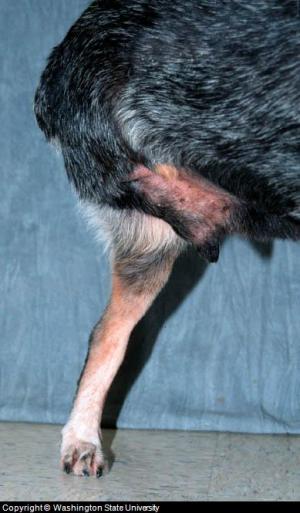
Picture of Dog Limb Amputation
These types of cancer are highly aggressive and metastatic in nature, and may spread to adjoining tissues. It can cause mass damage to the bones by causing surface erosion followed by “osteo-circular” damage up to the center of the bone. This type of dog bone cancer commonly affects the limbs and axial skeletons. Other types of dog bone cancer are chondrosarcomas, fibrosarcomas, liposarcomas, myelomas and hemangiosarcomas.
Symptoms:
Unfortunately, symptoms of canine bone cancer are highly non-specific and depend upon the site of the cancer. Lameness, bone swelling and ataxia (lack of coordination) are some symptoms that may represent a bone abnormality. Swelling becomes prominent in the later stages when progressive developments in any bone swelling are most likely to be noted.
Pain, anorexia (loss of appetite), aggression, loss of condition and weight loss are some other symptoms. In the case of metastasis (spread of disease) muscular problems and degradation are certain.
Clinically, swelling in the affected area should be carefully examined. A cancerous development may be identified as pulpy and painful on palpation (when touched). In case non traumatic and pathological fractures occur, ataxia, which is the lack of muscle coordination and shock is probable due to severe pain.
Diagnosis:
A clinical examination helps in suspecting the possible existence of canine bone cancer. A bone biopsy test can reveal the type and status of the cancer, A Michelle bone trephine and Jamshidi biopsy needle are used for this purpose. Confirmation of the disease is possible by using this method.
Radiography, on other hand is helpful in identifying any metastasis; thoracic radiographs are preferable for detecting any metastatic masses.
Treatment:
Surgical amputation of the affected area, if possible is the most effective mode of treatment. Limbs are usually amputated from the base, in order to minimize any chance of metastasis. Chemotherapy if combined with surgery is effective, but there are certain complications associated with this approach, such as the permanent decalcification of bone, which is irrecoverable. These options are only effective if any metastasis or spread of the cancer hasn’t occurred. Treatment can double the life expectancy of the dog.
After treatment, homeopathic supplements such as C-Caps Capsules may provide added support for reducing the effect of any symptoms and for maintaining cellular strength during recovery. Other remedies such as Muscle & Joint Support Formula , may help strengthen the muscles and joints. Only use this approach with advice of a veterinarian as part of the overall treatment plan.
If metastasis is confirmed, recovery is impossible. Such dogs usually do not survive for more then 5 months.
|
|
