" Canine oral cancer is a malignant form of mouth cancer that can quickly spread if not treated. There are three different types of cancers that are usually treated with surgery and radiation. "
Oral cancer is a term that refers to many different forms of cancer or tumors. It is also referred to as canine mouth cancer. Most of them are malignant ( have the potential to spread to other parts of body). The most common types of oral cancer in canines are malignant melanoma, squamous cell carcinoma and fibrosarcoma. All of these are malignant. The gums, mouth and pharynx are most commonly affected by oral cancer.
Clinical signs are very
helpful in identifying oral cancer in dogs, but a biopsy (test of a
tissue sample) is usually necessary as a confirmatory diagnosis.
Surgical resection and radiation therapy is usually effective only if
it is performed with care and by a specialist, so that chances of
recurrence are almost null.
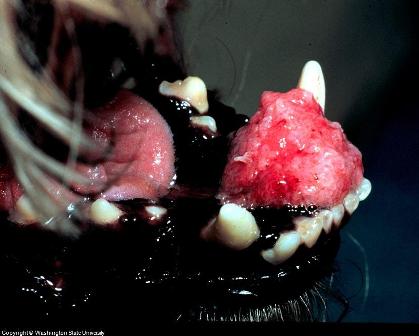
Oral cancers are usually malignant in nature. Of identified types, three of them are most common,
1) Malignant Melanoma, in simple words, this is cancer of skin. Oral mucosa (lining) and the skin is primarily affected and it may spread to other parts too.
2) Squamous Cell Carcinoma is the cancer of square epithelial cells; it may also occur in other parts of bod. In the oral cavity, it can affect the pharynx, gums, tongue & tonsils. This type is considered a rapidly spreading type of cancer.
3) Fibrosarcoma is the most common form of canine oral cancer. It is malignant and has a significant potential of recurrence, as it mainly affects the connective tissues; the prognosis for this type is very poor.
Dogs with oral cancer show symptoms of hyper salivation, bad odor and an unwillingness to eat. If the oropharynx (the part of the airway where the mouth leads) is involved in cancer, the dog feels extreme difficulty in swallowing – dysphagia. Ulceration of lesions and bleeding is common and frequent. The face may get swollen as the mouth cancer spreads in the oral cavity. The different degrees of the swollen mouth may help in predicting the stage of oral cancer. Surrounding lymph nodes swell before the appearance of oral and pharyngeal cancer.
A biopsy is essential to confirm the presence of oral cancer in dogs, particularly if the clinical signs and history indicate that this is the problem. Cytological tests involve examination of the nature of different tissues such as squamous epithelial, connective & that of oral skin. Malignant melanomas have a irregular and variable pattern. They may be pigmented or not pigmented.
Squamous cell carcinomas mostly involve the gums and tonsils, but may affect the tongue, upper part of pharynx and lips too.
Secondary lymphosarcomas should be differentiated with common inflammation of tonsils, in which tonsils are enlarged and appears red.
Oral cancer should be evaluated for the odds of recovery before treatment. Surgical resection of cancerous cells is very effective, and may result in a complete recovery if a massive resection is carried out. Local recurrence however is common.
Radiation therapy is another effective way to treat canine oral cancer, but involves repeated and massive application of radiation. Radiation therapy along with surgical resection is most effective in improving the prognosis.
Squamous cell carcinomas, on the other hand have very poor prognosis, due to extensive metastasis e.g. can quickly spread to the tonsils.
As an added measure, there is a homeopathic
approach to caring for a dog with cancer. While not a cure, it could
provide an extra level of support for the dog's strained immune system.
One product to research that is made specifically for this purpose is C-Caps
Formula..
Have a Question, Request or Want to Share a Story that could help others? Our editors, veterinary experts and pet health professionals will answer 1 question per week for free!
We will do our best to get back to you quickly (it depends on how many questions we receive each day). If you do require an immediate response we suggest using this online dog veterinary service that is available now.
|
|
The Merck/Merial Manual for Pet Health (Home Edition)
Cancerous Cell Radiography by
H. Foreman (Journal of Veterinary Medicine, Volume II – 2007)
George Washington
Unviersity
Visitors to this page also visited our guide to cancer in dogs and our information on dog mouth cancer.