Cancer: Skin
Types of Skin Cancer:
In general cancer canine skin is classified as benign or malignant, i.e. benign may not be always cancerous but has the potential to develop into cancer. Benign dog skin cancer does also run the immediate risk of spreading to other parts of the body. Malignant tumors on other hand are true cancers and can spread to other parts of the skin and body, including visceral (nearby) organs and the vascular system. This form of classification only describes the status of the canine skin cancer.
The definite classification of canine skin cancer is based upon the different types of skin tissues affected by any cancerous developments. Epidermal, hair follicular, connective and glandular tissues can be affected by different cancers, which are described in brief as;
Epidermal and Hair Follicle Cancers:
- Basal Cell Tumors; Basal cell tumors are a benign or malignant form of cancer canine skin. It originates under the hair bulb (base of follicular hair shaft). Earlier, this type of canine skin cancer was called a trichoblastoma, but recent research has re-classified this type of cancer as a separate type of skin cancer in dogs. Middle aged to older dogs and some tropical species of dogs are more susceptible. Incurable and distributed lesions are more common on the head, forelimbs and the neck.
- Squamous Cell Carcinomas; This
is the most common type of malignant skin cancer
in dogs. Some breeds such as hounds and poodles are at higher risk.
Squamous
cell carcinomas arise from epithelial skin tissues. Specifically they
arise from the root
of the hair follicular sheath. Lesions are most commonly noted on a
dog's
extremities, such as the head, abdomen and and perineum (part of the
pelvis that contain the genitals). Though the exact cause is unknown,
it tends to occur where there are thin hairs areas over the skin,
providing a lower level of protection from the sun. These are the areas
that are mostly affected by this type of
cancer.
Recently a modified form of squamous cell carcinomas has been identified, called “Subungual Squamous Cell Carcinomas”. Since this type of cancer is thought to be associated with sun radiation exposure; the ventral parts of body or underside are more commonly affected, as radiation reflects from ground up to the dog.
- Neoplasm of Hair Follicle;
Tumors or neoplasms beneath the hair follicle are
mostly benign in nature, but in many cases they have been found to be
cancerous.
Poodles, hounds, irish setters and retrievers are predisposed to this
type of canine cancer skin. Different tumors such as Tricholemmomas,
Trichofolliculomas,
Trichoepithelomas and Pilomatricomas are some common forms of tumors.
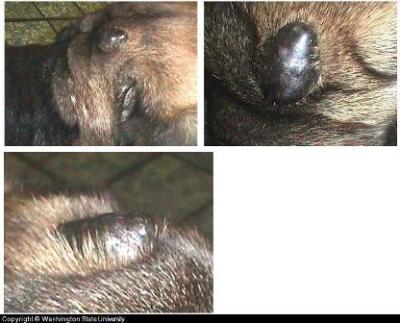
Cancer Canine Skin Picture
Tricholepithelioma Dog Skin Tumor on Head of a Mastiff
Cancers of Connective Tissues:
- Canine Fibrosarcomas; Also
called benign fibroblastic tumors may occur
on any part of the body and are caused by the excessive accumulation of
collagen fiber or due to hardened lesions on the skin. They grow over
time and possibly cause damage to any surrounding soft tissues.
Fibromas,
achrocordons, dermatofibromas and collagenous nevi are some common
forms of
fibrosarcomas.
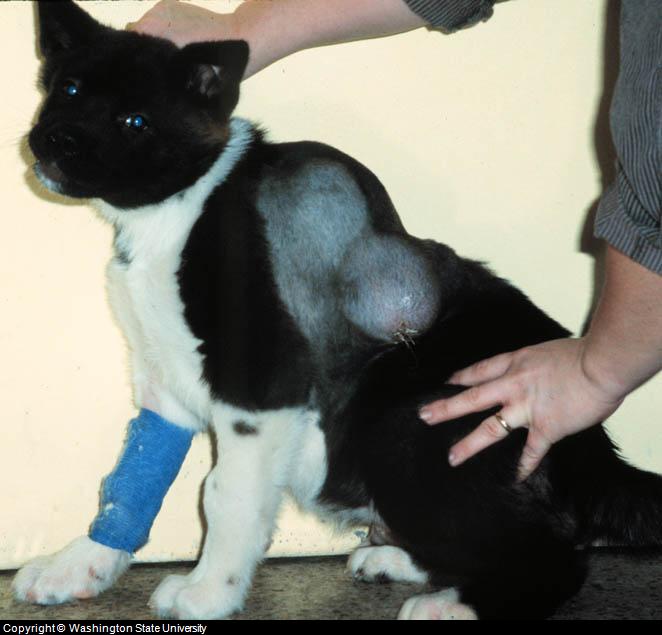
Picture of Akita Pup with Fibrosarcoma - Nerve Sheath Tumors; These are sometimes called traumatic nerve cell tumors. They arise from canine cancer skin Schwann cells. The nerve sheath, blood circulation related to nervous system and spindle cell cancers are some forms of this type of dog skin cancer. It tends to affect older dogs or those dogs that have recently have been through a severe dermal (skin) trauma, such as burns.
- Vascular Tumors; Both benign
and malignant
forms of vascular skin cancers have been noted in dogs. Major forms of
skin cancer in dogs include
hemangiomas, hemangiopericytomas and angiosarcomas.
Collectively, these may be identified as forms of hemangiosarcomas.
There are many factors related to the occurrence of these types of canine cancer skin in dogs, such as exposure to solar radiation, vascular insufficiencies and bone marrow cancer.
Glandular and Lymphatic Cancer Canine Skin:
- Glandular Skin Cancer Canine; Different glands associated with the integumentary (skin) system are either directly or indirectly affected by skin cancers. These are the most complicated forms of canine skin cancer, as they involve a hormonal imbalance in addition to the dog cancer. The cutaneous apocrine glands, eccrine glands, sebaceous glands, hepatoid glands and the anal sac appocrine glands are are commonly associated with primary or secondary skin cancers.
- Lymphatic Tumors; Mast Cell
Carcinomas, lymphoid tumors and skin
lymphomas are some common types of lymphatic tumors. These are
associated with
white blood cell activity in the body, and are likely caused by
an oncogenic (tumor causing) viral infection. Other possibilities have
been
identified as secondary cancers which spread from other areas of the
body to the skin such as cutaneous metastasis from visceral lymphatic
cancers (cancer that spread from the lymph system to the skin).
Skin lesions are prominent and appear as
an inflammation or are thought to be an allergy.
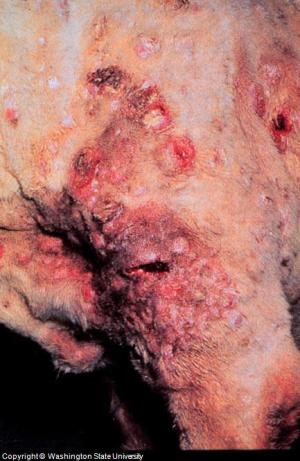
Picture of Canine Cutaneous LymphomaCanine mast cells are found throughout a dog's body. Normal cells have a role in managing inflammation and allergic reactions. Dog mast cell tumors (MCT) can occur anywhere in the body, most commonly in the form of a skin tumor. Canine mast cell tumors account for between 16%-20% of all dog skin tumors. In most cases a single tumor appears, however, it is thought that multiple tumors represent an origninal tumor that has spread.
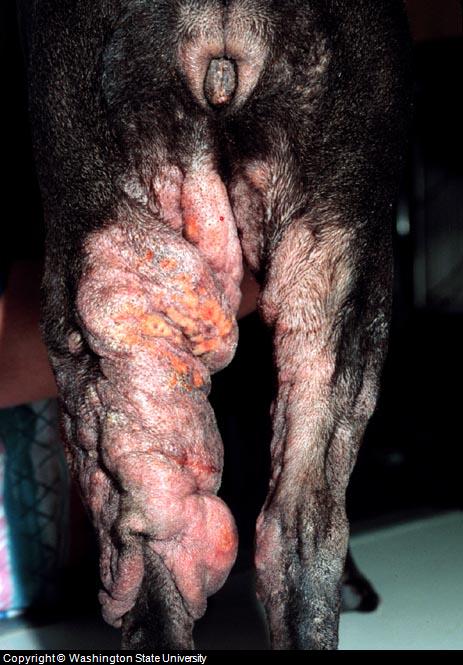
Picture of Dog Skin Cancer
Dog Mast Cell Neoplasia on Legs of a Sharpei
- Melanocytic Cancer; Melanocytomas and malignant melanomas are two common forms of cancer. They originate from melanocytes or from the pigmentation of skin tissues. Darkened skin and progressive degeneration are two major features of these cancers. Hard and darkened melanocytes may gather at the skin surface to form a tumor, which is potentially cancerous in nature.
Symptoms and Diagnosis:
Clinical features of cancer canine skin do not differ from several other skin problems, such as nodules, lesions, inflammation and alopecia. The biggest difference is that symptoms caused by cancers are incurable, they persist and spread over time time. Malignant forms of skin cancer spread to other parts of the skin and viscera (internal organs), while benign tumors grow larger after quite some time.
Anorexia, vomiting, diarrhea, lymphatic insufficiency and respiratory problems may accompany some malignant forms of cancer. Possibilities of other conditions should be eliminated by using detailed laboratory tests and radiographs.
A detailed biopsy is the only possible way to confirm the presence of cancer canine skin. Tests are performed with the help of a fine needle. Collected tissues are thereafter studied for evidence of cancerous development.
Cancer Skin Treatment:
Different options for cancer canine skin such as surgery, cryosurgery (freezing diseased area), chemotherapy and radiation therapy have been identified as effective for treating various types of skin cancer in dogs. Detailed and confirmatory diagnostic procedures are essential prior to the implementation of any treatment plan.
Supportive therapies such as the application of dermal (skin) preparations, and supplements can be helpful in improving a dog's overall condition and for reducing the side effects of chemotherapeutics and radiation. Natural remedies such as C-Caps Formula can also help in this regard.
To find a dog skin specialist, visit the American College of Veterinary
Dermatology (ACVD).
|
|
