Recurring Third-Eyelid Adenocarcinoma in a Senior Dachshund
by Kim
( Marietta, GA USA)
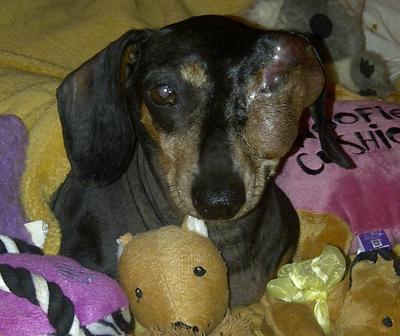
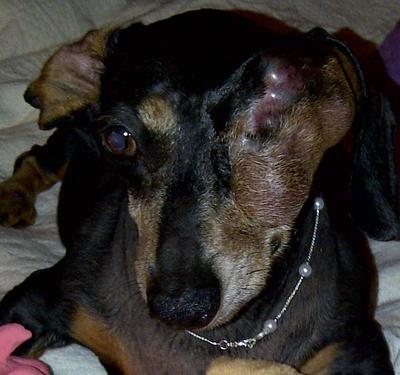
Reader Question
My miniature dachshund is 12 today! She has a huge, very aggressive and quick growing adenocarcinoma thatstarted out as a benign adenoma of her third eyelid over a year ago. The tumor was removed in July of 2011 and was benign. It grew back within 6 months, and was again removed in January of 2012, at the same time removing the eye, as the tumor was wrapped around the eyeball. This time to biopsy was malignant. SHe was treated with natural supplements, acupuncture, chinese herbs, an anti-cancer diet, and it still came back within 4 months. It was removed yet again in July of 2012, and had also begun to spread into the inside of her mouth. This was laser surgery, and was pretty invasive, with the doctor confident she got it all. Her liver enzymes were also elevated to above 3,000. She continued with the holistic care, and the tumor still came back, this time within 6 weeks. It is now huge. It doesn't seem to cause her much, if any pain. She eats great, plays, chews on toys and bones, and seems as happy as always. The cancer doesn't seem to have spread to any other organs. Is there anything you can suggest that may stop the tumor at this point? Thank you!
Answer from Our Team
We're so sorry. Third-eyelid gland adenocarcinoma tends to come back locally after surgery, and once it has spread into nearby tissue such as the mouth, it becomes very hard to remove completely. We don't know of any supplement or diet shown to stop it.
Options to ask a veterinary oncologist about include radiation therapy, which is sometimes used after surgery for tumors that keep coming back, and comfort-focused care. Because she is eating and playing well, many owners focus on keeping her comfortable and watching for pain, bleeding, trouble eating or breathing. Ask the oncologist to check her lymph nodes and chest for spread, and about pain relief. Your vet can help you plan for when her quality of life changes.
Our page on cherry eye in dogs explains the third-eyelid gland.
This is general information, not a diagnosis. Please follow your own vet's advice.


