Dog Bone, Joint & Muscle: Paw Sprain
Canine Bone Joint and Muscle QuickLinks
Causes:
A dog paw sprain is most commonly caused during play, when running, jumping, and as the result of an accident. It can even be caused by walking on a hard or rough surface if a dog is experiencing some type of muscular or ligamentous degenerative disease.
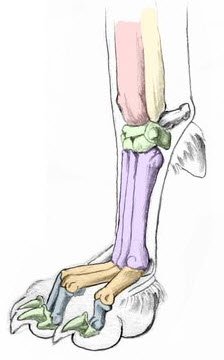
Dog Paw Diagram
Paws have more keratin and protein on their surface. Some dogs which do not get enough nutrients, especially “Glucosamine” in their diet, may find that the ventral surface of the paw becomes weakened and thus the paw muscles may get sprained, even due to walking and usual running and playing behavior.
Symptoms:
A paw sprain is considered to be a relatively mild condition. It is characterized by symptoms such as swelling, pain, limping and sometimes severe stress. It happens suddenly and a dog may show symptoms soon after it happens, but it should be noted that some dogs hide their pain psychologically. They do not tend to show pain, allowing a mild condition to worsen. It is common for a mild paw sprain to turn into a severe sprain in which the joint bones become free and a ligament is completely torn. Signs of limping, swelling, pain and stress in the paw should be initially considered as a dog paw sprain. Dogs that experience even mild stress on the paw after playing or activity should be checked for any type of muscular stretch.
Diagnosis:
Diagnosis is made via a detailed examination of the different parts of the paw; joints are felt for any swelling and pain in particular part of the paw. Some dogs may not allow a paw examination due to pain and stress, thus local anesthetics can help. A detailed examination and confirmation of the condition is necessary, as the joints and bones in the paws are closely related. Paw X-Rays, taken from different angles, can also help to confirm the problem in order to reach a clear diagnosis regarding the dog paw condition.
A sprain should be differentiated from a fracture, muscular damage, degeneration and cancerous developments, all of which can also cause pain, swelling and limping in dogs. A dog's medical history, examination and x-rays are the most appropriate way to diagnose a dog paw sprain.
Dogs which repeatedly experience canine paw sprain problems should be considered as having muscular weakness, nutritional deficiencies and possibly anatomical deformities in the musculoskeletal system.
Treatment of Dog Paw Sprain:
Mild paw sprain cases usually resolve on its own within 36 – 48 hours, but this does not mean that the patient does not require any attention at all. Dogs suffering from a paw sprain should be carefully handled and the paw should be examined. It's better to have a veterinarian examine the dog paw problem in detail, in order to define the status of your pet.
Treatment is usually accomplished with the administration of anti inflammatory drugs. Pain killers in cases of dog paw sprain are never recommended, since dogs may feel comfortable and start walking, putting more pressure on already stretched and injured tissues. If a dog experiences severe pain and stress, pain killers can be administered during the latter stages of the condition, but a dog should be kept confined. If a dog is confirmed as having any nutritional deficiency, such as not having enough “Glucosamine”, nutrients should be administered in an adequate amount.
Rest and supportive care is the key to achieving a timely recovery. A patient should be kept isolated, restricted and monitored. Natural remedies not only hasten recovery, but strengthen muscular functionality and ability. Two products to consider are Paw Paw, which targets the paw specifically and Muscle and Joint Support, which helps strengthen and maintain the entire musculoskeletal system. These types of natural remedies are highly recommended to support any muscular condition your dog is suffering from.
|
|
