Ear Care: Yeast Infection
Dog Ear Table of Contents
Causes:
Malessezia pachydermatis are the causative yeasts for dog ear yeast infection. Malessezia. canis, M. pachydermatis, Pityrosporum pachydermatis and P. canis are some species of yeast which occurs on a dog’s skin normally. They especially are found in the ear, mucosal surfaces (oral, anal), anal sacs and vagina. Studies shows that the occurrence of malessezia is closely related with the streptococcal species of bacteria. Therefore it has been suspected that yeast infection may be primary or secondary to bacterial infections and allergies (food or atopy).
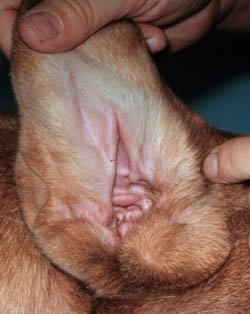
Dog Ear Picture - Healthy
Ear is Pink in Color
(Source: Washington State University SVM)
Different assumptions have been related to the severity and occurrence of canine ear yeast infection. Bacterial infections, allergies, environmental factors, lipids of the ear canal and a dog's genetics are some common factors correlated with a yeast infection in dog ear.
Symptoms:
An ear is the most probable site for any occurrence of this condition, for the reason that it contains a lot of lipids in the form of wax, a dog ear has a significant population of normally occurring bacteria and yeast and most importantly, it has been identified as the most commonly affected area by allergies of any kind, food or seasonal.
Dogs of any age, breed and sex can get infected, but some breeds such as terriers, poodles, sheepdogs and German shepherds are predisposed to dog ear yeast infection genetically. Similarly, dogs that have skin problems, bacterial infections, allergies or seborrhea are more at risk.
Clinically, pruritus or severe and persistent itching is the primary sign of dog ear yeast infection. A dog will continuously shake its head and will respond very aggressively. Scratching can worsen the condition ending with self injury. Hyper–pigmentation, darkening of the skin, waxy discharges from the ear and severe illness will almost always accompany pruritus.
In chronic cases, symptoms of hyper–pigmentation and an occurrence of lesions may spread to the lips, oral cavity, toes and the anal area. Hair loss, redness, and thickening of the skin are some other symptoms associated with chronic dog ear yeast infections.
Diagnosis:
Clinical signs may help, but due to an association of various conditions such as bacterial infections, allergies and skin problems with similar symptoms, it is hard to confirm a yeast infection based on symptoms alone. Skin scrapings, tissues from lesions and swabs of the ear canal can be examined under the microscope for confirmation.
Yeast occurs normally on a dog’s body, thus it is required to confirm any increased population of in a tested sample. Similarly, culturing and sensitivity tests can confirm an increase in the population of bacterial species, which are directly related to yeast infection in dog.
Treatment:
Yeast infection in dogs is generally treated after a detailed diagnostic study is conducted and reviewed. Affected dog ears should be cleaned with ear cleaners and antiseptic solutions twice every day followed by topical application of anti fungal preparations (cream, lotion etc) such as itriconazole.
Recovery usually takes a week or more. General application of anti fungal preparations and the rinsing the affected dog with medicated shampoos are recommended for chronic and generalized infections.
Inflammation and pruritus can be treated by using non steroidal anti inflammatory drugs (NSAID) and anti–allergic drugs respectively. Any of these treatment options should be considered using prescription products only.
Natural and herbal remedies available in the form of shampoos and those for pruritus can be used without any prescription. These include products such as Ear Dr. which is formulated to help keep a dog's ear canals clear and free of blockages and eliminate or reduce symptoms such as dog ear itch. In terms of a skin cleaner, products such as Clenzor can be used to clean the outer ear in order to improve overall skin condition and aid the effectiveness of any topicals prescribed by your veterinarian.
|
|
