Care and Treatment of Parvo Virus in Dogs

" The Origin of Parvo virus in dogs, which is also called “Canine Parvovirus” of "CPV", is unknown. It is a stable virus, which can persist in the environment for months to years as it is resistant to common disinfectants, temperature and acidic mediums. It causes a spectrum of clinical symptoms, depending upon the form of the disease. Two forms, i.e. gastroenteritis and myocarditis has been identified in young dogs, while gastroenteritis which is characterized by bloody diarrhea, vomiting, stress, loss of condition and sudden death is more common. It takes 3 to 7 days for  any of these symptoms to appear. Parvo virus in dogs is diagnosed through a series of serological tests after collecting a detailed clinical history and symptoms. Treatment of canine parvo virus is dependent upon the severity of the disease and is mostly initiated through supportive care only. Secondary bacterial infections are common, but the use of antibiotics is not recommended until the dog recovers. Since, there is no specific treatment for the elimination of the virus; supportive care and natural remedies can help in reducing symptoms and improving the dog’s condition. "

Transmission of Parvo Virus in Dogs?

The origin of Parvo virus in dogs is still unknown. It can persist in the environment for months to years and common disinfectants are unable to eliminate it. It is also resistant to temperature and various acidic mediums. American PitBull Terriers, Pinschers, Rottweilers and German Shepherds are identified as being at greater risk of disease. It is also notable that canine parvo virus causes a significant rate of death in infected dogs, as much as 16 – 48 % of infected dogs may die due to parvo virus infection.

Dogs may get infected through direct contact with diseased dogs. Indirect means of transmission, such as eating contaminated food and drinking contaminated is also common. An infected dog sheds the virus in feces after 3 weeks of infection and recovered dogs may act as a carrier of parvo virus and shed the virus for a long time.

Once ingested, parvo virus in dogs replicates in the lymphoid tissues of the oral cavity and pharynx. After replicating in significant numbers, the virus spreads in the blood stream. The virus attacks the rapidly dividing cells of the body, especially bone marrow cells, the epithelium of the small intestine and the lymphopoietic cells. This weakens that immune system, allowing the virus to interfere with digestion.

Mild intestinal symptoms along with lymphopenia (a reduction in the number of lymphocytes in the blood) are noted in this stage of disease. In advanced stages, after 3 days of the earlier infection, the virus destroys specialized cells of the intestine called crypt cells of villi. The virus replicates and clinical symptoms are noted at their peak At this point the virus would have shed in the feces for as long as a week. The affect of the disease reduces over time, and the virus cannot be detected after 10 – 14 days of earlier infection.

parvo virus in dogs
Parvo Virus in Dogs infects mature cells in the small intestine reducing the ability to absorb nutrients.
Source; Cornell College of Veterinary Medicine/Baker Institute

Due to the collapse of the villi during infection, bacterial growth is increased and even the normal flora of the intestine may enter the blood stream and cause bacteremia. Secondary bacterial infections are common in dogs with parvo virus infection.

Clinical Symptoms of Parvo Virus in Dogs

Most dogs with parvo virus infection may appear asymptomatic (showing no canine parvo symptoms), but when stressed (e.g. boarding, running, pining, and grief etc.), the stress itself may trigger clinical features of the disease. Parvo in puppies may result in the appearance of severe symptoms, with the disease possibly causing death. The severity of clinical symptoms is also dependent upon the exposure to the virus, i.e. duration and mode of contact with the infected dog and the ingested dose of virus through direct or indirect transmission.
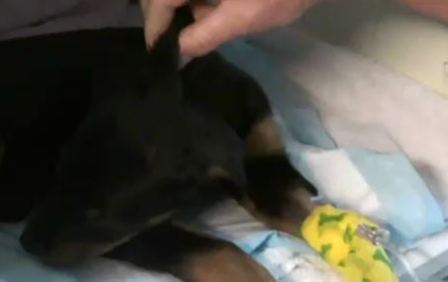
puppy parvo patient
Puppy Parvo Patient with IV drip in paw.  You can check if puppy is dehydrated by pressing skin up in a fold.  If it stays up, it means the puppy or dog is dehydrated. Other signs of illness are sunken eyes.
Source: Dr. Greg DVM

There are two clinical forms of parvo virus in dogs, gastroenteritis and myocarditis ( inflammation of the myocardium  which is the middle layer of the heart wall). Young puppies are more prone to both of the forms, but due to recent developments in research and standardized immunization, chances of the clinical form of myocarditis have significantly reduced. It is noted that clinical myocarditis due to parvo virus in dogs is not seen that often.

Gastroenteritis is more common in puppies, usually of age 6 – 20 weeks. Due to the puppy’s age, their immune status is not as developed, making it difficult for the body to protect itself against infections such as puppy parvo. Similarly, male dogs are more prone to infection, since they freely roam around. Parvo virus in dogs causes clinical symptoms such as as anorexia (loss of appetite), vomiting, fever, lethargy and bloody diarrhea. Feces contain excessive quantities of mucus and blood and nutrient absorption is badly affected. Other complications related to the condition are pulmonary edema (accumulation of fluids in chest and lungs) and alveolitis (particular inflammation of alveoli in lungs).

Helpful Video Overview on Puppy Parvo Treatment


Diagnosis of Parvo Virus in Dogs

Diagnosis is strictly related to the clinical signs and the history of the dog’s condition. Fecal ELISA and Hemagglutination tests are some serological procedures usually performed for to confirm the presence of the condition. These tests are usually done during the course of the clinical disease. Tests conducted too early or late during serological examination cannot reveal results that confirm the presence of the condition.

Treatment of Parvo Virus in Dogs

There is no specific treatment available to eliminate parvo virus in dogs. Supportive care is the only way to restore body condition. Most dogs recover by restoring and maintaining fluid balance. Fluids should be administered orally if the patient is not exhibiting signs of vomiting. Dogs with a severe infection and vomiting should never be administered any solids or liquids orally. For these dogs, fluids and electrolytes should be administered intravenously along anti-emetic (for vomiting) and anti-diarrheal drugs, which involves a veterinary stay and an I.V. drip.  This approach has been proven to be very effective.

Secondary infections are common, but antibiotics are strictly prohibited for dehydrated dogs. These should only be administered on prescription and after the dog recovers from earlier dehydration. Ampicillin, Cephalosporin along with aminoglycosides is considered treatment of choice for dogs with bacteremia and septicemia.

Since parvo virus in dogs cannot be specifically treated, earlier supportive care is only way to save life of patient, therefore it is always recommended that along with fluid therapy, natural remedies and herbal extracts should be used in priority. These extracts are not only safe, but also enhances recovery rate; which is key towards successful treatment of parvo virus in dogs.

Parvo Prevention & Control:

To prevent reinfection and the spread of the virus to other dogs, the dogs environment should be thoroughly disinfected. This includes washing all bedding and items such as dishes. Household bleach with a dilution of 1:30 of bleach to tap water is a very good in-activator of the virus.  

Not every dog when exposed with contract canine parvo. Factors include overall health, weather (dry, cold), the strength of the virus and if the dog is stressed, Additional measures, such as the regular administration of supportive remedies to dogs at risk can enhance immunity and reduces the chance of clinical infection.

In terms of natural homeopathic parvo remedies, suggestions include (click links for clinical support):

  • Parvo–K: A homeopathic, natural formulation of the parvo vaccine plus other helpful ingredients such as Zinigiber, Arsenicum (digestive support) and Belladonna (temperature and fluid balance.
  • Immunity and Liver Support: Helps the immune system with support from ingredients such as Dandelion (improves liver and digestion), echinacea (immune system function), Ashwaganada (blood support) and milk thistle.
  • Runi Poo Relief: To help firm stools with ingredients such as Lady's Mantle (firm stools and bowel function), Plantain (promotes digestive health) and Podophyllum (digestive support)
  • Energy Tonic: For stamina and fitness during and after recovery with ingredients such as Eleuthero (endurance), Rosemary (circulation), Spirulina (nutrition/chlorophyll) and Amalaki (energy).

Vaccination is the best approach for parvo virus prevention. Vaccination against parvo virus should begin at age 4 – 6 weeks, with the last vaccination administered at age 15 – 20 weeks. An annual booster vaccination is required for complete disease prevention.

There is no simple parvo cure.  The key is to see a veterinarian who will monitor your dog and help to  control symptoms during parvo recovery. This will include steps such as restoring fluid balance and providing medications that can help prevent fluid loss from diarrhea and vomiting. Once these are brought under control, the parvo virus for dogs treatment plan can include improvements in the dog's diet and the use of natural parvo remedies and supplements to further support the immune system.  

Have a Canine Parvovirus Related Question or Helpful Story?

Have a Question, Request or Want to Share a Story that could help others? Our editors and pet health professionals will answer 1 question per week for free!

We will do our best to get back to you quickly (it depends on how many questions we receive each day). If you do require an immediate response we suggest using this online dog veterinary service that is available now.

Enter Your Title or Question Topic

Tell Us Your Story or Question! [ ? ]

Upload 1-4 Pictures or Graphics (optional) [ ? ]

Add a Picture/Graphic Caption (optional) 

Click here to upload more images (optional)

Author Information (optional)

To receive credit as the author, enter your information below.

Your Name

(first or full name)

Your Location

(ex. City, State, Country)

Submit Your Contribution

Check box to agree to these submission guidelines.


(You can preview and edit on the next page)


References:

The Merck Veterinary Manual

Cornell College of Veterinary Medicine


Dog Health Search


Home
Ask a Veterinarian
Adrenal Glands
Allergies
Anal Glands
Anorexia
Barking
Bladder
Bloat
Blood
Bowel
Bowel Obstruction
Cancer
Colitis
Constipation
Cough
Cushing's Disease
Dehydration
Diabetes
Diarrhea
Distemper
Ear
Eyes
Fleas
Flu
Giardia
Hip
IBD (Bowel Disease)
Incontinence
Ketoacidosis
Knee
Knee (Stifle)
Lice
Liver
Low Energy
Lyme Disease
Mange
Older Dog Health
Pancreatitis
Panting
Parvovirus
Ringworm
Skin
Sprain
Stomach
Thyroid
Urinary Problems
Urinary Tract Infection
Vaccine Schedule
Valley Fever
Worms
Resources
Read Our Blog
Privacy Policy
About/Disclosure
Insurance
Breed Information
Heart Disease
Seizures
Spaying
Vacuum Pet Hair
Subscribe To This Site
XML RSS
Add to Google
Add to My Yahoo!
Add to My MSN
Subscribe with Bloglines