Digestive System: Canine IBD Symptoms and Treatment
Cause:
Unfortunately, there is no one recognizable cause for canine inflammatory bowel disease. This is largely because it is referred to as an autoimmune disease. This means the dog’s immune system attacks its digestive tract and organs and damages the stomach, small and/or large intestine. What’s going on inside your dog is that several types of inflammatory cells and other chemicals are invading and attacking the digestive organs.
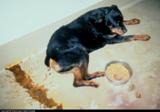
Canine Inflammatory Bowel Disease is often accompanied by diarrhea as one of the symptoms. This is one of 6 criteria used to determine the severity of the disease. Others are weight loss, appetite, activity levels, vomiting and stool frequency. Picture Source: Washington State University
Some vets feel that canine inflammatory disease may arise because of the dog’s diet – a protein that doesn’t agree with them and causes an autoimmune response. Others feel that bacterial infections, genetics and even glitches in the immune system could be the underlying cause. In the meantime, it’s a disease where you largely treat the symptoms, since the cause is not always clear. Canine inflammatory bowel disease strikes dogs at any age, although typically, it is seen in dogs that are 8-years of age or older.
Signs and Symptoms:
Some things you will notice if your dog may have inflammatory bowel disease canine are:
- Fever
- Depression
- Bloating
- Vomiting
- Lethargy
- Dehydration
- Diarrhea
- Painful bowel movements
- Stools with blood
- Stools with mucus
- Stools with blood and mucus
- Loss of appetite
- Loss of weight
NOTE: Your dog’s symptoms may vary depending on
where in their gastrointestinal tract the attacks are happening. For
example, if the small intestines and the stomach are involved in the
attacks, then vomiting will be more common. On the other hand, if the
attacks are taking place in the colon, you will usually see diarrhea
and your dog may have painful bowel movements, with blood and/or mucus.
Diagnosis:
While the diagnosis procedure may vary from vet to vet, typically there are a number of things that are done to diagnose your dog. The first thing tends to be a complete physical exam, including palpation of the intestines, fecal tests for worms or other nasty infections or poisoning, blood tests and in some instances, x-rays. X-rays do not provide an affirmative diagnosis of this disease, but they will show a thickened intestine, a signpost of canine inflammatory bowel disease. The difficulty is that a thickened intestine may be indicative of other diseases.If the vet is able to rule out worms, bacterial infections, Giardia or poisoning, the next step may be an endoscopic biopsy, with your pet under light sedation. This is considered to be the gold standard to affirm if canine inflammatory bowel disease is present, as a small piece of tissue from the dog’s gastrointestinal tract is removed for examination. A definitive diagnosis is possible by examining the tissue under a microscope, as the naked eye can’t see the minute changes in the tissue that signal the presence of disease.
The vet will diagnose canine inflammatory bowel disease “only” if the condition is chronic, there are inflammatory cells onboard and all other causes such as bacterial infections, food intolerance, cancer and parasites have been ruled out. The process of ruling things out is referred to as differential diagnosis – ruling out what something “isn’t.”
The interesting and frustrating thing is that often a chemistry panel, done on a dog the vet suspects has inflammatory bowel disease, comes back normal. Other signs they would look for are an inflamed liver and pancreas; that usually announces their presence with elevated liver enzymes and/or pancreatic lipase immunoreactivity. Often the complete blood count will be normal as well, but the dog may show an increase in eosinophils.
Treatment of Canine IBD:
Treatment of inflammatory bowel disease in dogs is based on an assessment of the condition to determine if it is "uncomplicated IBD" (symptoms are limited to gastrointestinal problems) or "complicated IBD" (involves other body systems). This is based on a scoring system against the following criteria:- weight loss
- frequency of stools
- consistency of the dog stools
- vomiting
- appetite
- dog's behavior (activity levels, activity, lethargy)
Uncomplicated canine inflammatory bowel disease usually responds to changes made to a dog's diet. If the problem is in the small intestine, a gluten free diet with a new protein source (novel protein) can help. Also a hypoallergenic hydrolyzed diet might be of benefit.
After dealing with this myself for my Weimaraner, I also changed his food. In most instances, this is part and parcel of dealing with this disease. We approached it by first offering him a form of protein he had never had, buffalo. It worked within three days, but it sometimes takes longer for a response, depending on how bad your dog was before being diagnosed.
If the change of protein had not worked, I could have tried a high-fiber diet. The addition of psyllium and beet pulp have shown to improve dogs with IBD colitis.
In many cases of inflammatory bowel disease canine, you will find yourself trying to find a food that your dog can eat without too many problems. You need to have patience and just take your time finding something that works for your dog.
Only dietary management is needed in dogs that respond to treatment in up to 14 days. Dietary change should be continued for 14 weeks. A dog can resume their normal diet through a gradual change starting at that time. In dogs that have a food allergy or suffer from intolerance to food, they will need to continue the new diet.
If a dog does not respond to changes in diet, there are a number of ways to treat inflammatory bowel disease canine that involve a variety of drugs. At this point a dog is considered to have complicated IBD. Medications are introduced such as Prednisone, Budesonide, and Dexamethasone (steroids); Metronidazole, Tylosin (antibiotics); Azathioprine, Cyclophosphamide (immunosuppressives); antispasmodic (for vomiting) and antidiarrheal drugs such as Loperamide (Imodium) or Diphenoxylate (Lomotil). With large intestine involvement, your dog may get Sulfasalazine, 5-ASA and Mesalamine compounds.
NOTE: do NOT stop the medications for inflammatory bowel disease canine too early, even if you see signs of improvement. Keep administering them until your vet tells you it is okay to stop.
You may also want to try natural remedies in combination with traditional veterinary medicine, but tell your vet about what you are doing, as natural medications and remedies don’t always mix too well with conventional medicines. There are several worth considering including RuniPoo Relief to firm the stool and for digestive system support, Immunity and Liver Support to improve the body's natural defenses. Overall digestive function can be helped by Digestive Support.
These products contain many of the following that are commonly used in natural dog IBD remedies:Herbal remedies you may wish to investigate for inflammatory bowel disease canine are:
- Licorice
- Marshmallow Plantain
- Slippery elm
- Goldenseal
- Echinacea
- Dewormer – in case parasites are present
- Fatty acids – your dog may benefit from the addition of omega-3 fatty acids to help reduce GI inflammation
- Cobalamin – this is known as Vitamin B and usually dogs with inflammatory bowel disease are low on this
- Prebiotics – help promote the growth of good bacteria in the intestines
- Probiotics – the source of the good bacteria for the intestines. This is currently being researched with some indication that it can help with mild canine inflammatory bowel disease.
- Glutamine – helps rebuild intestinal lining
- Digestive enzymes – to help the digestive system to work properly
|
|
