Digestive System: Dogs and Constipation
Constipation Quicklinks
Overview:
Problems related to dogs and constipation are common. It refers to
any
condition where there is difficult, infrequent or partial defecation
from the gastrointestinal system. The term obstipation refers to a
condition where the stool hardens to the point where in cannot be
removed by the body. Tenesmus refers to straining to defecate with no
stool produced after trying.
There are a number of conditions and diseases that can prevent the
feces from moving through the colon.
Dog Constipation Symptoms:
- Straining during defecation
- Feces that is hard
- Less defecation frequency than normal
- It takes a long time to defecate accompanied by blood
Causes:
Dogs and constipation may be caused by any interluminal, extraluminal or Neuromuscular factors in the gastrointestinal tract.
- Interluminal; If a dog intakes indigestible matter in food, it may result in difficulty passing the matter through the large intestine and colon. This may be indigestible fiber, litter, bones, hair etc mixed with feces. Intraluminal factors may also be termed as partial or a complete obstruction of tract. Indigestible masses and tumors are also causes for this kind of obstruction.
- Extraluminal; If the colon of a dog is compressed due to any reason it may result in a narrowing of the fecal path, thus causing an obstructive form of constipation. This “canine obstipation” is usually due to a narrowed pelvis, which is common in the aftermath of a pelvic bone fracture. Similarly some tumors and the enlargement of pelvic lymph nodes are also considered when there is a reduction in normal defecation.
- Intrinsic; These are neuromuscular factors, associated with an abnormality in the nerve supply or in the muscular contraction mechanism in the colon’s bed. A number of causes for intrinsic dog constipation exist such as injury to muscles and nerves in the colon, diseases like hypothyroidism, hypercalcemia and pelvic nerve injury. This is the most complex and rare form of dog constipation, and usually remains undiagnosed due to unstable diagnostic results.
- Medications; Certain dog
medicines such as antacids, kaopectate, anticholinergis,
antihistamines, diuretics and opiods can cause constipation in dogs.
Diagnosis
A simple clinical examination and dietary history is usually enough to diagnose dogs and constipation. In terms of determining the cause, referred to as differentiation, several procedures may be required to identify the exact cause. Radiography may help in diagnosing any obstruction, tumor, hyperplasia or defect in the pelvis. Recurring constipation is more common in dogs with neuromuscular disorders. Neurological tests therefore are recommended in chronic, recurring cases.
A diagnosis of constipation will need to be differentiated from
colitis (causes frequent attempts to defecate) and stranguria caused by
cystitis which is an inflamed urinary bladder.
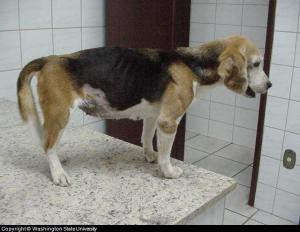
Dogs and Constipation
Dog with anorexia, abdominal
distension, weight-loss and constipation.
Sent to ultra-sound and X-ray
examination. The diagnosis was intestinal obstruction.
Source: Washington Sate University
Treatment:
Most cases of dog constipation treatment usually are usually rectified
with
the
intake of large volumes of water and changes in the diet. Constipated
dogs should be fed highly digestible fiber accompanied by a significant
amount of water to drink. Consider a dog food that is 7% to 13% fiber
such as Hill Prescription Diet w/d. Dogs also can benefit from an
increase in exercise.
Laxatives can be used along with dietary adjustment. Laxatives are identified used as a lubricant to enhance and regulate bowl movements. Laxative should never be used in dehydrated dogs. Laxatives soften fecal material, forms bulk and improves contractility.
Docusate sodium and docusate calcium at dose rate of 50 mg capsules for 2 – 3 days act as an effective emollient or moisturizing laxative. Laxtulose at the dose rate of 0.5 mL/Kg, per oral is considered as an osmotic laxative, which retains water in the colon and thus softens feces and improves bowl movements. Bisacodyl at a dose rate of 5 – 20 mg if used, depends upon the size of dog, and acts as stimulant laxative, increasing the propulsive activity of the bowel muscles. Stimulant laxatives should never be used in dogs with an obstruction of the GI Tract.
An enema solution is used to moisten fecal material and initiate a bowel movement. A practical and effective approach is the use of warm isotonic saline or tap water, containing mild soap at the rate of 5 mL/Kg may be introduced in the rectum. Docusate sodium can be added to this solution in severe cases. Some toxicities and side effects are associated with the use enema solutions, such as depression, ataxia (failure of muscle coordination), and hemorrhagic diarrhea (bloody).
If the dog constipation is chronic and does not respond to medical treatment, a colectomy is indicated. Colectomy is a surgical operation of the colon by either resection (surgical removal of part of the colon) or correction of any abnormality of surgical importance. Colectomy is used in the case of injuries, neuromuscular disorders, tumors or pelvic disorders associated with the colon.Do not use mineral oil or white petrolatum to treat dogs and constipation due to the risk of fatal lipod aspiration pneumonia. Owners should monitor the frequency of defecation 2x per week, with reduced monitoring as the dog returns to a normal cycle.
Home Remedies:
There are several home remedy for dog constipation choices that can be helpful for mild constipation. Note if problems related to dogs and constipation last more than a day or is accompanied by other signs such as blood, be sure to have a veterinarian check for an underlying cause such as an obstruction (grass, bones, ingested cloth etc.).- Olive Oil:
A tablespoon of olive oil added to your dog's food several times a week
could help to avoid constipation and improve the coat.
- Add a
Homeopathic Remedy to the Diet: There is a homeopathic
remedy
available that has a combination of ingredients, including fiber that
can help a dog suffering from constipation or help prevent future
episodes. Natural ingredients such as psyllilum husk, green
oats, red alow and nat mur all have a positive impact on the digestive
systems of dogs. One reputable product for further research
that combines all of these is called PetAlive
Natural Moves for Pets It is specifically designed to promote
healthy digestion and treatment of constipation in dogs .
- Grape nuts
flakes: Mix Grape Nuts Flakes into dog food as a
convenient source of extra fiber and as an easy way to ease dogs and
constipation. can Mix in 3 teaspoonfuls per day until the constipation
clears.
- Pumpkin: Use
canned pumpkin for fiber. Mix 1 – 2 tablespoons into food until
the constipation clears.
- Milk: Ordinarily
milk isn't given to dogs as it can cause diarrhea. However,
in the case of dogs and constipation, milk products can help.
Provide 1/8 cup to small
dogs are ½ cup to large dogs 2x per day. Once the constipation clears
reduce the amount of milk each day until it is eliminated from the
diet.
- Cut The Hair: Mechanical
constipation is a
term used for constipation caused by long hair tangled in the area
where a dog defecates.
5. Home Remedies – add in native remedies.
Prevention:
In order to prevent dog constipation symptoms or its recurrence, dog food must contain highly digestible fiber, access to drinking water and a dog must be allowed to defecate frequently. Also follow some of the home remedies for dog constipation tips and make it a part of your dog's routine. One other tip is to not make food available throughout the day so that a dog has periods where they can digest the food that was eaten.
Fact Sheet:
Dogs and Constipation (PDF, Source: Best Friends Veterinary Center)
|
|
