Digestive System: Liver Problem Symptoms
Anatomy and Functions of the Dog Liver:
The liver is the largest gland in a dog’s body. It usually weighs 400 grams (.88 pounds) in adult dogs. It is deep red in color, with four lobes and four sub-lobes. It is located in the front of the abdomen cavity just below the diaphragm and wrapped in peritoneum (membrane).
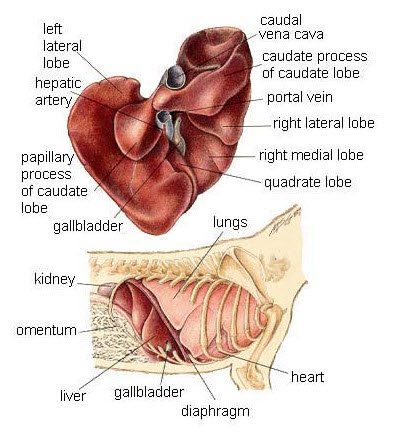
Picture of Canine Liver
The pictures in this section are reprinted with permission by the copyright owner, Hill's Pet Nutrition, from the Atlas of Veterinary Clinical Anatomy.
These illustrations should not be downloaded, printed or copied except for
personal, non-commercial use.
A dog’s liver performs numerous functions. One study estimated that about 70% of the physiological functions of a living body are directly or indirectly associated with the liver. Different activities such as storage of nutrients, energy, vitamins and some proteins and minerals are the main function of this organ. Some other vital functions of this organ are: it stores glucose in form of glycogen, helps to breakdown fats for consumption, and the processing of proteins.
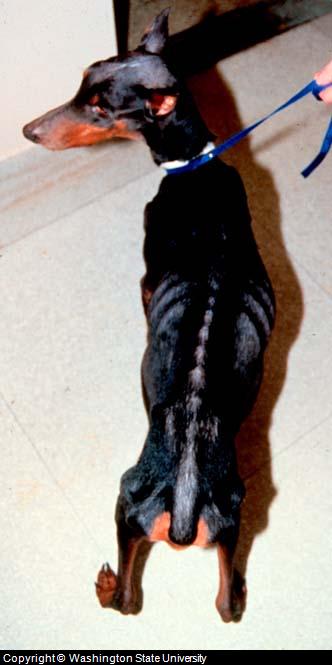
Picture of Canine with Liver
Disease that is Emaciated
Other functions include the processing of immune cells, digestion mechanism support and the liver has a role in the recycling of blood cells. In addition, the liver helps in the excretion of wastes found in whole blood. Blood circulates in the body and is transported to the liver, prior to moving into the heart.
Pathology:
In cases where a dog experiences specific symptoms associated with dog health liver disease, such as weight loss, jaundice, lethargy, abdominal ascites and pain, it is likely that the dog health issue being experienced is related to the liver. There are different pathological conditions or diseases which can cause canine liver issues, either directly or indirectly.
Dog liver disease may arise due to several bacterial, viral, nutritional, and congenital factors or some other factors associated with other organs in the body. Symptoms are usually noted only once a dog’s liver is badly affected; otherwise the regenerative capacity of liver can heal itself in mild cases.
Diagnosis:
A clinical examination for different specific and non-specific signs and symptoms of dog health liver that a patient may be experience can help in suspecting the type of canine health issue under investigation. Laboratory procedures are usually considered compulsory for to confirm the presence of any liver related illness and for the effective identification of a specific treatment plan.
Dog liver enzymes are primarily examined for elevated levels. Levels of ALT, ALP etc. are detected initially, and if required further advanced tests such as a serology screen are ordered that look for the presence of toxins and antigenic (antibody from the immune system) materials. Similar to primary enzyme elevation detection, some proteins such as albumin, bilirubin and globulin are also required to differentiate the common liver diseases in dogs so that a specific cause can be identified.
Radiography and ultrasonography can only help when studying any anatomical deformities, which are possible in the case of fatty liver disease, fibrosis, cirrhosis, tumors or congenital deformities.
Treatment Plans:
In different dog health issues related to the liver, there are different approaches for treatment. These may be dependent upon making a confirmatory and differential diagnosis, made possible by the aforementioned techniques.
Different drugs such as anti-inflammatory medications, anti-oxidants, immunosuppressant drugs, anti-fibrotic and some anti-cancer drugs are usually used for treating dog health issues related to the liver. All of these are usually required in high doses for effective treatment, thus several side effects and complications of toxicity are also associated with this approach. Herbal remedies such as Liver-Aid Formula and dietary management are proven to be the most effective in this regard.
Diet should be rearranged for dogs with liver health issues. A dog liver diet should contain a low levels of fat, proteins and sodium salt. Essential proteins can also be added in higher amounts, but non-essential proteins should be reduced. Similarly fiber levels must be adequate to support the digestive tract’s normal functioning. Excessive amounts of fiber are not recommended. Commercial dog food can contain preservatives and additives in it, therefore home made dog food is preferred during the treatment. Check with your veterinarian on preparing a balanced diet since this can be difficult.
Supplementation is another way to combat dog liver disease. Supplements can be added to a dog food, which can help to improve appetite, restore body energy and physiology and can help in keeping liver at its best while treatment.
Surgical options are usually required to resolve dog health liver issues, where either an anatomical deformity occurs or where a blockage of ducts is diagnosed. Canine liver cancer, bile duct blockage, fatty liver and fibrosis are some examples of canine liver disease which may require a surgical procedure for treatment.
Monitoring every 1 - 3 weeks during treatment is considered to be a vital part of treating dog liver disease, with different tests required for the detection of elevated enzyme and protein levels in the blood and radiography to detect any new developments.
|
|
