Digestive System: Dog Constipation Symptoms
Constipation Quicklinks
Generalized Symptoms:
Almost all dogs with constipation may have some common symptoms; which can initially help in identifying dog constipation. The passing of hard feces, labored defecation, anorexia, lethargy, stress and abdominal stress are some general symptoms. If a dog is straining for a full day, then an examination by a veterinarian is warranted.
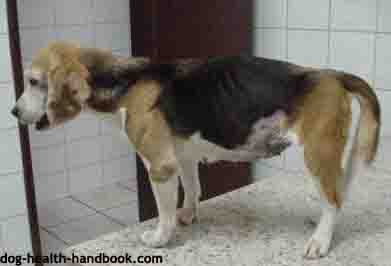
Dog Constipation Symptoms
Dog with anorexia,
abdominal distension, weight-loss and constipation.
Sent to ultra-sound and
X-ray examination. The diagnosis was intestinal
obstruction(megacolon/fecaloma).
Source: Washington State University
The appearance of defecated material can help in assessing the cause of dog constipation symptoms, e.g. “ribbon shaped” feces, defecated after an effort may be a sign of an obstruction or narrowness of an enlarged intestine. Similarly, if blood appears in the feces, it may be due to a bad case of constipation, caused by hemorrhaging (bleeding) in the veins or colon.
Causes:
Along with general dog constipation symptoms, there are some symptoms which can be associated with different causes of dog constipation.
Nutrition and Constipation: In the case of a constipation caused by a nutritional disorder or constipation caused due to ingestion of some indigestible materials, like bones, garbage, litter etc, dog constipation may not be as severe as noted in an obstruction. The feces may be firm, but contain at least 5–7% water.
Obstruction and Feces: Feces, if examined, contains fibrous material. In the case of obstruction, feces passed are usually absent of fiber or in very low volume. On abdominal palpation or rectal observation, if the rectum appears filled with large volumes of excretory material, then it may be due to an obstruction. Also, when a dog tries to defecate, but fails due to obstruction, the feces may appear ribbon–shaped. In some cases of obstructive dog constipation, blood may also be present in the feces; which is due to the rupturing of the colon's blood veins.
Inflammation: In case of inflammation, infection or any pathological condition in the large intestine, dogs may experience constipation and other generalized signs of illness. Vomiting in such cases is very common; while other signs like high fever, lethargy, stress and loss of body condition are common.
Neuromuscilar: Increased neuromuscular activity of the colon is usually associated with stimulation of a nerve response; which is directly controlled by the brain. This may happen as a side effect of many drugs which enhance body activity. Steroids are one example of drugs that can have this effect.
Behavioral:
If a dog is left in a house for a long period of time or in a strange
location they may resist moving their bowels.
Treatment:
Other diseases that look like dog constipation symptoms need to be ruled out before constipation is diagnosed. This includes colitis, hypothyroidism, bladder problems or a an obstruction in the large intestine.
As dog constipation is a symptom, which can be caused by
different
diseases and conditions, in almost all cases, symptomatic treatment is
considered essential along with a generalized approach of healing. It
is essential to treat underlying causes, as treatments that only
address the symptoms can
help only in a timed recovery or resolution of issue.
Water should be supplied in large volume. along with food
should
that helps to boost energy. Fats should also be included;
which will
help in increasing intestinal motility. Suitable ingredients
should
be
selected through trial therapies and should be continued
after the constipation is resolved including a high fiber diet such as
Hill's
Prescription Diet w/d.
Laxatives can be used for treating dog constipation. Decussate calcium, decussate sodium, and magnesium hydroxide (milk of magnesia - 2 to 4 ml per lb of body weight every 12 to 24 hours)) are effective laxatives. Only use under the advice of a veterinarian as if the dog is suffering from an obstruction, obviously they can be harmful.
A mild laxative may be helpful when traveling. Address behavior by providing many opportunities to defecate outdoors.
One home remedy for older dogs is to soak dry food in water (1:1) in order to increase the moisture a dog gets when eating. Soak for 20 minutes.
Underlying causes of the constipation should be identified, and a systemic treatment plan should be implemented. These may include use of antibiotics, manual removal of the feces from colon (could take 2 to 3 days); use of a “Repeated Abdominal Palpation” technique of physiotherapy (pressing of the abdomen); while in some cases severe obstructive dog constipation or a tumor etc may require a surgical procedure like a colectomy.
Prevention
The key to prevention are diet (high fiber) and making sure a dog has enough water. A natural remedy designed to maintain bowel and digestive health could also be of value. Products such as Natural Moves contain Psyllium Husk (high fiber source), Green Oats (bowel health), and Red Aloe (supports bowel movements), which combined are safe and could be of help. The Psyllium fiber will help to pull water into the feces, helping the defecate with less strain.
Free Fact Sheets For Download
Dog Constipation (PDF, Source: etown animal hospital)
Dog
Constipation Treatment (PDF, Source: Hill's)
|
|
