Eyes: Cloudy
Dog Ear QuickLinks
Causes:
Cloudy eyes in dogs is only a representation of some underlying problem, which can be unilateral (involving one eye) or bilateral (involving both eyes). Dog with cloudy eye is represented with an opacity over the surface of the eye or which is in the deeper eye tissues which may or may not cause visionary defects.
Some dogs may develop cloudiness on the white part of the eye, due to which the dog eyes appear dusty or pale in color. In such cases, vision is usually not affected. Such cloudy eye symptoms are usually noticed during systemic diseases. In other cases, which are of more clinical importance, the transparent areas of the eye are involved.
Eye parts such as the cornea, eye transparent medium/fluids or lens may get opaque due to the cloudiness caused by some underlying, localized or generalized problem. Such dogs with cloudy eye surely experience a functional defect, i.e. problem in vision during the course of the disease. Cloudiness in dog eyes is generally related to a loss of vision, involving parts of the eye meant for the entrance of light into the eye. These parts such as the cornea, transparent eye medium and lens are most commonly affected as the result of various underlying problems. These may be injuries over the cornea, infections in ophthalmic tissues, inflammatory cell infiltration into a transparent eye medium and degeneration of the cornea or the lens of the eye.
Specifically, dog cloudy eye usually exhibits diagnostic results such as corneal infections, edema (fluid accumulation), inflammatory responses, cataracts, glaucoma, deposition of fats and calcium on these structures, hemorrhage and disorders of the vitreous body in between the lens and retina.
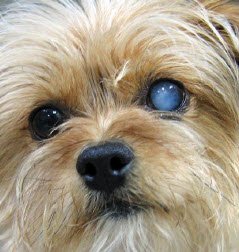
Picture Dog Cloudy Eye
due to Canine Cataracts
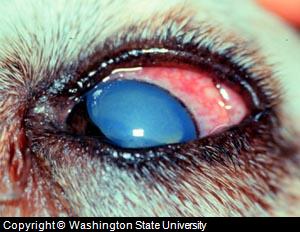
Picture Dog with Cloudy
Eye die to Dog Glaucoma
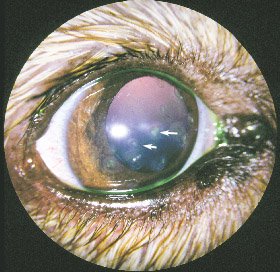
Picture Canine Punctate
Ulcerative Keratitis
Condition
in both eyes with symptoms such as dog eye pain and dog cloudy eye
problem (opacity problem). Eye from Shetland Sheepdog
Source: All
Eye Animal Clinic
Clinical Symptoms:
Cloudy eyes in dog is an exhibition of an underlying health problem, which may be minor to major in nature. Cloudiness in one or both eyes is never a normal symptom and should be examined thoroughly. Clinically, a dog with cloudy eye is usually examined for other manifestations as well, such as inflammation, swelling, pain, redness, discharges and defects in vision. The severity of symptoms such as pain and loss of eye function can vary based on the underlying cause.
Diagnosis:
Understand a dogs clinical history and examination are the initial steps for diagnosing an underlying cause. Both of the eyes should be thoroughly examined for any unusual symptoms. It is possible that the level of severity may differ in both eyes, therefore it is always recommended that dogs with cloudy eyes should have both of their both eyes examined separately. It is usually done because the congenital or glaucomic reasons for dog eye cloudiness may cause a different clinical status.
Since there are many underlying causes which can leave a dog with canine cloudy eye, all basic eye tests should be conducted including basic and if required, advanced diagnostic techniques. Different tests such as tear tests, fluorescein staining, tonometry, biomicroscopy, opthalmoscopy, goniscopy, culturing of discharges and cloudy fluids and ultrasound of retina may help in confirming the underlying cause. These tests are also performed to differentiate one condition from other and to reach a confirmation of the diagnosis.
Treatment:
Specific dog eye cloudiness treatment is purely based upon a confirmatory diagnosis. The underlying cause should be treated accordingly, with the help of different medical and surgical approaches. Therapeutics, such as antibiotics, corticosteroids, anti-inflammatory drugs and dilators are used in the form of ointments, eye drops etc. Some systemic diseases that cause cloudiness and eye functional defects should be treated accordingly.
Supportive therapies and critical care of a dog with poor vision due to cloudiness is needed as well. Such dogs should be kept in an environment with the least number of hurdles on the ground. Similarly, dogs that are prescribed pupil dilators should not be exposed to light for long durations, especially after administering the therapeutics.
Natural remedies such as Eye Heal and supportive eye supplements can help to improve overall eye health and vision. These remedies not only help to keep dog eyes clear of any secondary infections and cleans the eye surface, but also supports the physiology of all ophthalmic tissues.
|
|
