Dog Allergies: Overview
There are many types of allergies. Some of the most common allergies are inhalant or seasonal allergies, food allergy, contact allergies and insect bite dermatitis. Canine allergies are actually a response of the body towards any foreign particles (also called allergens). This allergic reaction may appear more pronounced in some dogs, due to the genetic makeup of the dog. Dermal signs (skin), along with other systemic symptoms, which are associated with different allergic reactions, mainly characterize these allergies. A dog’s history is one of the most important factors when diagnosing any form of allergy. Clinical signs are also helpful when trying to diagnose an allergy. Dog allergy treatments are based on the underlying cause and symptoms. Usually anti–allergy drugs are effective.
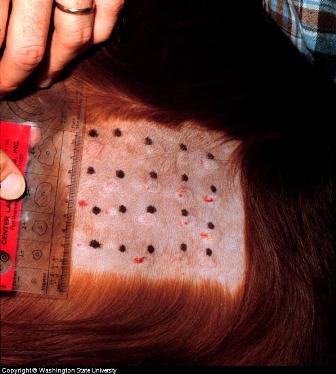
Picture Seasonal Dog Allergy
Source: Washington State University
Different types of Dog Allergies:
Canine Atopy: Also called “Inhalant Allergy”, canine atopy is one of the most common forms of dog allergies in existence today. This allergy may develop from contact with different dog seasonal allergies such as grasses, pollens, or environmental issues such as dust and pollution. It can also be due to something called inhousing. Inhousing occurs when dogs are kept in a close environment for a long period of time and then exposed to an open environment. When this happens, they can be affected by environmental allergens, even if a dog is not allergic, which generally is termed “extensive in – housing".
Canine Atopy is also called a dog seasonal allergy or an environmental allergy. It is estimated that 10% of the entire canine population is hypersensitive to environmental allergens; these dogs are genetically sensitive towards allergens of the environment. Environmental allergens include pollen, dust, pollutants, toxins etc. are either inhaled or absorbed through the skin, respiratory tract or gastrointestinal route.
This form of dog allergy is characterized by the inflammation of cells in the body where an environmental allergen attaches and causes a hypersensitive response and an inflammatory response. Skin tissues are directly exposed to the environment, so it makes sense that primarily dermal (skin) signs are exhibited. Other signs like that of rhinitis (an inflammation of the mucous membrane lining the nose), runny nose, mild fever, sneezing or coughing are also symptoms.
Food Allergy: Some dogs are sensitive to the nutritional components of their food. Beef, chicken, eggs, milk, wheat etc. are some components of dog food; in which a dog’s immune system responds vigorously. Some proteins included in these nutritional components, act as triggers for immune response. Some breeds of Labrador, terriers and spaniels have a higher incidence of this type of canine food allergy.
This form of dog food allergy is characterized by mild to severe itching on the skin, hair loss, swelling, rashes or even vomiting. Dog food intolerance is more common than dog allergy, which refers to difficulty digesting certain food components and is sometimes mistaken for allergy, which is an immune system response.
Insect Bite Dermatitis (skin reaction): Flea–Bite allergy and Wasp bite allergy are two common forms. Fleas contain histamine like substances in their mouth; which is then transmitted to the dog’s body when fleas bite. It is characterized by severe itching, redness and hot spots on the surface of the skin.
Wasp and other arthropods may bite, resulting in an allergic reaction on the skin. A rapid and severe medical response is required. Inflammatory cells can proliferate (to increase rapidly in numbers) and result in swelling, redness, increased blood supply and a slight loss of function at the affected area. A mild fever may also occur.
Treatment of Different Dog Allergies:
Treating Canine Atopy: Effective treatment for Canine Atopy has three components;
- reducing exposure to the allergen
- symptomatic therapy (symptom relief)
- and immunotherapy (reducing sensitivity through allergy shots)
Treating Food Allergies: Certain dogs may get an allergy, due to 1–5 ingredients in dog food; these are beef, chicken, eggs, milk and wheat. Once the actual cause of the allergy is identified through trial therapies, the food containing that ingredient should not be given to the dog any longer. An elimination diet is the most reliable way to treat a food allergy, though it prolongs the diagnosis. The diet will be reduced to a simple protein and carbohydrate, such as chicken and rice with new foods added over time.
Treating Insect
Bite Dermititis: the Underlying cause, i.e. fleas must be
eliminated to reduce the effects of allergy. Fleas can be eliminated by
use of anti–flea shampoos and mechanical ways of cleaning, such as
vacuuming etc.
A symptomatic treatment plan of applying natural remedies like mustard
oil; is very effective in reducing pruritus (skin bumps).
BeFree
Flea Shampoo is a natural product that has a
deterrent effect against
fleas while cleansing the skin and coat and encouraging healthier skin.
Anti–histaminic drugs are also effective, but the major concern should
be the amount of fleas infesting the dog. A
natural remedy such as
FleaDerm ointment can also help with Flea Bite Dermatitis by
soothing the skin in the flea bite area.
Treating Dog Eye Allergies: These types of allergies are also casued by environmental factors, insect bites near that eye, food allergens and hypersensitivity by the immune system. Treatment of dog eye allergies involves 2 - 3 doses of anit-histamine. To ensure the problem doesn't return, the underlying cause needs to be eliminated if possible.
Itch Relief: there is a natural remedy available that uses safe natural herbs to help relieve canine itch. The product, Allergy Itch Ease, contains ingredients such as Arum triph (itch relief), Viola tri (for itch all over a dog's body) and Comocladia (calms redness and canine skin irritation). It will also help to temporarily ease dog skin allergy.
Human Allergy to Dogs
Human allergic response to dogs usually occurs in people that are allergic to other allergens such as seasonal allergies or foods. Every dog gives off dander and saliva, two of the most common factors in allergy. These factors can be mnimized with a short hair, smaller breed dog that is trained to minimized barking. Suggested breeds include Wheaton Terriers, Bichon Frise and Bedlington Terriers. Other dog allergy breed suggestions can be found in our guide on human allergy to dogs.
|
|
